How to Clean a Refrigerator? A Deep Sanitization Guide
Cleaning a refrigerator is about more than just tossing expired milk. It is a process of removing hidden bacteria, clearing out dust from mechanical parts, and neutralizing odors that can affect the taste of your fresh food. A professionally cleaned fridge not only looks better but also runs more efficiently, potentially lowering your utility bills.
Quick Answer: Empty, Wipe, Disinfect, and Organize
The gold standard for cleaning a fridge is to empty it completely, allow removable parts to reach room temperature, and then scrub them with warm, soapy water. Use a specialized vinegar or baking soda solution for the interior walls to kill germs without using harsh chemicals near your food. Always finish by vacuuming the condenser coils to ensure proper cooling.
Step-by-Step Refrigerator Cleaning
Step 1 – Remove All Food
Take everything out. Use this time to check “Use By” and “Best By” dates. Toss anything that is wilted, moldy, or expired. Place perishables like meat and dairy in a cooler with ice packs if you expect the cleaning to take more than an hour.
Step 2 – Take Out Shelves and Drawers
Pro Tip: If you have glass shelves, let them sit on the counter for 20 minutes before washing. Putting a cold glass shelf into hot water can cause it to crack due to thermal shock. Once at room temperature, wash them in the sink with dish soap.
Step 3 – Clean Interior Surfaces
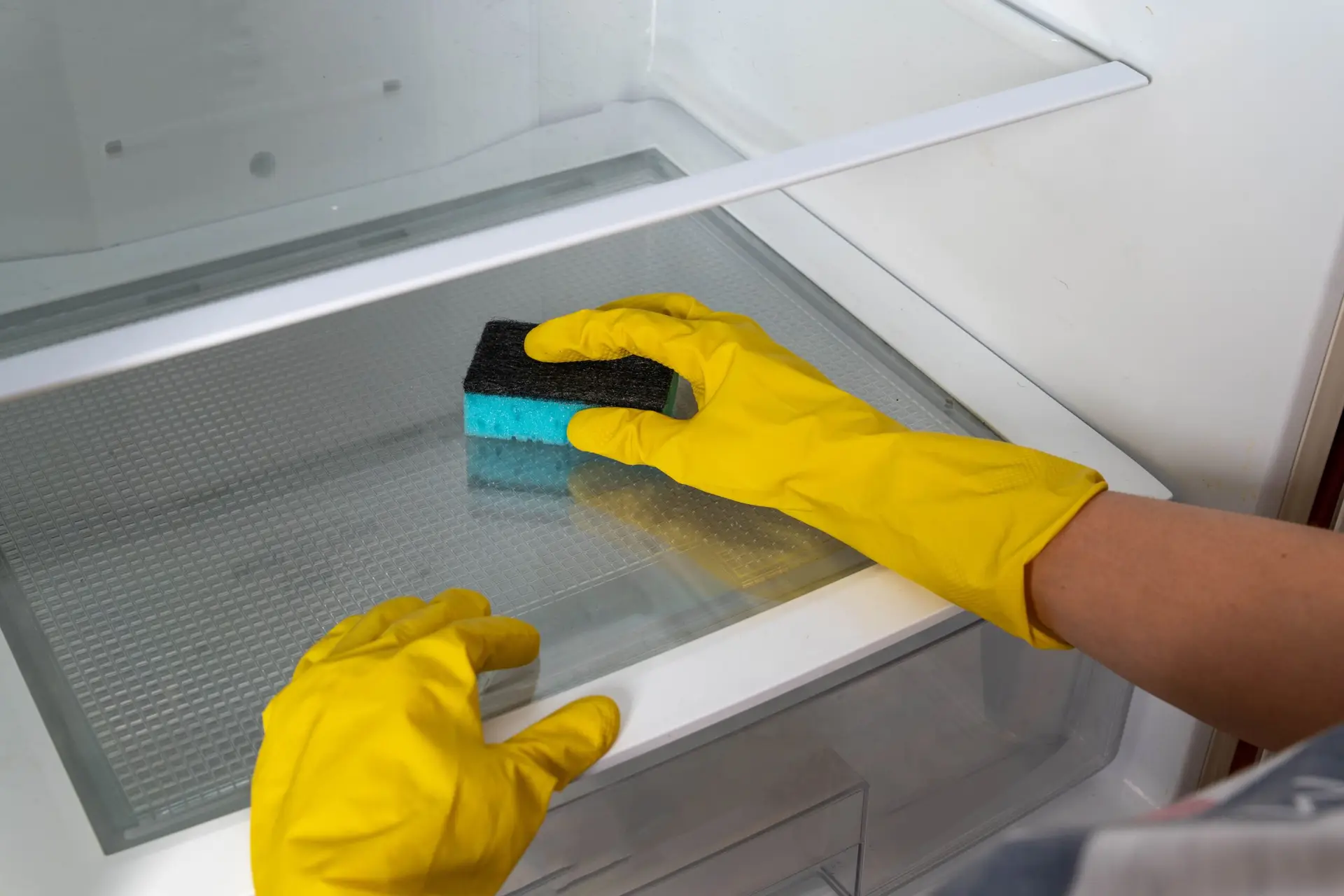
Wipe the ceiling, walls, and floor of the fridge. Use an old toothbrush to get into the tracks where the drawers slide and the rubber door gaskets (seals), where crumbs and mold often hide.
Step 4 – Dry and Organize
Ensure every surface is bone-dry before putting shelves back. Use clear bins to group items (like a “deli bin” or a “condiment bin”) to catch future drips and make your next cleaning session much faster.
Best Cleaners for Refrigerators
In 2026, U.S. homeowners are moving away from bleach and toward food-safe, natural alternatives:
Vinegar Solution
Mix 1 part white vinegar with 3 parts warm water in a spray bottle. Vinegar’s acidity cuts through grease and kills most household bacteria without leaving a chemical scent.
Mild Soap
A few drops of clear, grease-cutting dish soap (like Dawn) in a gallon of warm water is perfect for soaking bins and shelves. It’s effective, safe, and rinses away easily.
How to Remove Odors
- Baking Soda: Keep an open box in the back of the fridge. Replace it every 3 months.
- Activated Charcoal: More powerful than baking soda, charcoal filters are excellent for absorbing strong smells like onions or fish.
- Vanilla Extract: For a pleasant scent, dampen a cotton ball with vanilla extract and leave it on a small plate in the fridge for 24 hours.
- Fresh Coffee Grounds: Placing a bowl of dry grounds inside can neutralize stubborn, “stuck-on” odors.
How Often Should You Clean Your Fridge?
- Weekly: Wipe down the door handles and check for any leaking containers or expired leftovers.
- Every 3–4 Months: Perform a full “Deep Clean” (Step-by-Step process above).
- Twice a Year: Vacuum the condenser coils (usually located at the bottom behind a grill or in the back). Dust buildup on coils makes the compressor work harder, shortening the life of your fridge.
FAQ: Refrigerator Maintenance
What is the best way to clean stainless steel exteriors?
Wipe in the direction of the “grain” using a microfiber cloth and a dedicated stainless steel cleaner or a drop of olive oil on a damp cloth to remove fingerprints.
Can I use bleach inside my fridge?
It is not recommended as a primary cleaner. If you must sanitize after a raw meat spill, use a very diluted solution (1 tablespoon of bleach per gallon of water) and rinse thoroughly with plain water afterward.
Why does my fridge still smell after cleaning?
The odor might be trapped in the drip pan (located underneath the unit) or inside the evaporator coils. If a deep clean doesn’t work, check the pan for standing water or mold.
Need Help With Your Kitchen Deep Cleaning?
At Harmony Cleaning, we know that detailing a refrigerator is a time-consuming chore that requires a lot of heavy lifting. Our professional teams include appliance interior cleaning as part of our move-in/move-out and deep cleaning services, ensuring your food is stored in a truly sanitized environment.
- Thorough Sanitization: We clean the spots you can’t see, like gaskets and tracks.
- Eco-Friendly Products: We use food-safe cleaners that protect your family.
- Professional Organization: We help put things back in a way that makes sense.
Would you like Harmony Cleaning to include a professional refrigerator deep clean in your next scheduled visit?