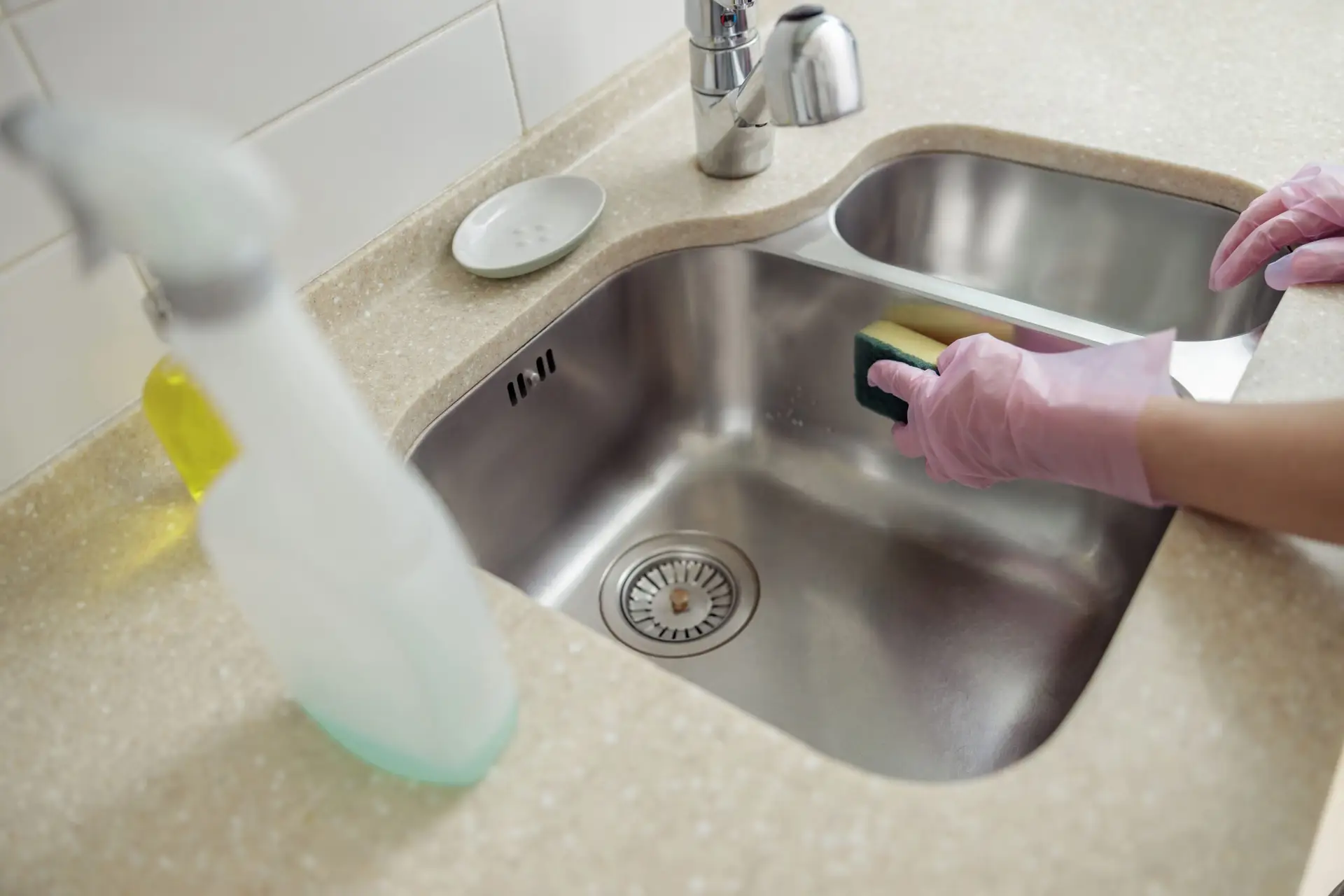
How to Clean a Kitchen Sink Drain? A Gold Star Specialist Guide
In the heart of the home, the kitchen sink drain is a critical utility that handles more than just water—it manages organic waste, cooking oils, and food starches. At Harmony Cleaning, we view a high-performing kitchen as a Masterpiece of sanitation. In 2026, the professional standard for kitchen drain maintenance focuses on breaking down complex lipids (fats) and organic buildup using “Gold Star” non-toxic methods that protect your plumbing and prevent foul odors.
Quick Answer: Flush With Baking Soda, Vinegar, and Hot Water
The most effective way to maintain a clear kitchen drain is the baking soda and vinegar “volcano” flush, followed by a high-volume boiling water rinse. For kitchen sinks specifically, this chemical reaction is essential for emulsifying the microscopic layers of grease that trap food particles. To achieve a “Gold Star” result, perform this flush monthly to prevent the “Masterpiece-ruining” odors associated with decaying organic matter.
Step-by-Step Method: The Harmony Protocol
Kitchen drains often have a thicker “sludge” layer than bathroom drains due to cooking oils. Follow this specialist sequence for a thorough clean:
1. The Hot Water Prime
Pour a kettle of boiling water directly down the drain. This thermal shock softens solidified fats and greases, making the subsequent chemical reaction more effective.
2. The Alkaline Application
Pour 1/2 cup of baking soda down the drain. If you have a double sink, repeat the process for both sides to ensure the entire “Y-joint” of the plumbing is treated.
3. The Acidic Emulsification
Pour 1/2 cup of white vinegar down the drain. You will hear a fizzing sound—this is the chemical reaction breaking the molecular bonds of grease. Cover the drain with a plug to force the carbon dioxide bubbles downward through the pipes.
- Specialist Tip: Allow the solution to dwell for 20 minutes. In a Masterpiece kitchen, patience is the key to deep-level cleaning.
4. The Final Thermal Flush
Finish with another gallon of boiling water. This clears away the loosened debris and ensures that no baking soda residue remains to harden in the P-trap.
What Causes Kitchen Drain Clogs: The Specialist Insight
To maintain a Gold Star home, it is essential to understand the unique “enemies” of kitchen plumbing:
- FOG (Fats, Oils, and Grease): Even liquid oils can solidify once they hit the cold pipes underground, creating a “fatberg” that traps other debris.
- Starchy Foods: Rice, pasta, and potato peels create a sticky paste when wet, which can act like glue inside your pipes.
- Coffee Grounds: Contrary to popular belief, coffee grounds do not “scrub” pipes; they settle in the P-trap and create a heavy, sand-like blockage.
- Fibrous Vegetables: Celery, onion skins, and corn husks can tangle around garbage disposal blades and create a structural mesh that catches other food waste.
Maintenance Tips: Keeping Your Gold Star Flow
- The “Ice & Salt” Disposal Reset: If you have a garbage disposal, grind a cup of ice cubes and a handful of coarse salt once a month. This mechanically scours the blades and the internal canister to maintain a Masterpiece level of hygiene.
- Cold Water Only: Always run cold water when using the disposal. Cold water keeps fats solid so they can be chopped up and flushed away, rather than melting and coating the pipes.
- Citrus Refresh: Grind lemon or orange peels in the disposal to release natural oils that neutralize odors and provide a Gold Star scent.
- Use a Sink Strainer: Even if you have a disposal, use a fine-mesh strainer to catch small food particles that shouldn’t enter the plumbing system.
FAQ: Professional Kitchen Hygiene
My kitchen sink smells but isn’t clogged. What’s wrong?
This is usually caused by decaying food caught in the “baffles” (the black rubber splash guard) of the garbage disposal. Scrub the underside of the baffles with an old toothbrush and soapy water to restore a Masterpiece scent.
Can I use a chemical “drain opener”?
Specialists advise caution. Most commercial drain openers are highly caustic and can damage the seals in your garbage disposal or weaken older pipes. Our “Gold Star” baking soda and vinegar method is safer for long-term plumbing health.
How do I clear a slow-moving disposal?
Unplug the unit and manually turn the motor from the bottom using an Allen wrench. Once it moves freely, perform the “Ice & Salt” reset mentioned above to clear any remaining Masterpiece-obstructing debris.
Experience the Harmony Standard
At Harmony Cleaning, we understand that your kitchen’s efficiency depends on the details you can’t see. Our specialists provide the Gold Star attention to detail that keeps your kitchen functioning as a Masterpiece of health and hospitality. From deep-cleaning your appliances to maintaining your sink’s hygiene, we bring professional expertise to every corner of your home.
- Detail-Oriented Specialists: We address the root causes of odors and clogs.
- Non-Toxic Protocols: Protecting your food prep areas and your plumbing.
- The Harmony Standard: Quality you can see, reliability you can feel.
Is your kitchen sink draining slower than your busy life allows? Contact Harmony Cleaning today for a specialist deep clean and let us restore the Gold Star flow to your Masterpiece home!