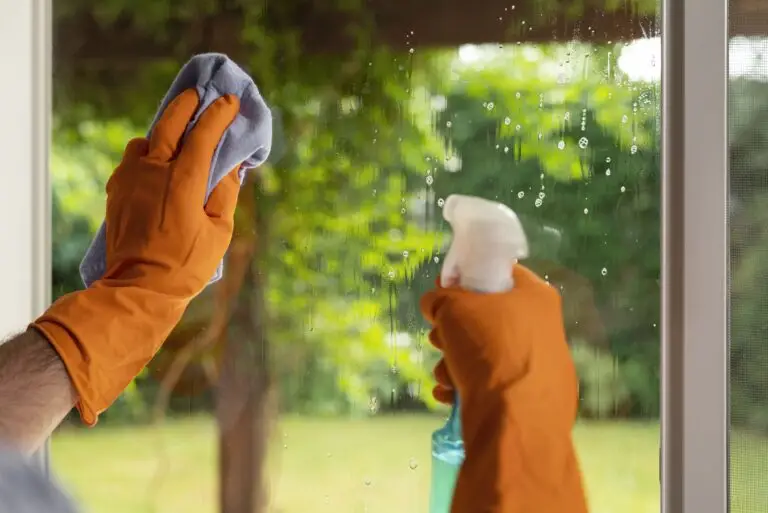
How to Remove Water Stains From Glass?
Water stains—often appearing as hazy, white, or chalky spots—are a common headache for homeowners. Whether they are clouding your shower door, fogging up windows near sprinklers, or leaving marks on glassware, these stubborn spots are rarely just “dirt.”
At Harmony Cleaning Services, we know that these marks are mineral deposits left behind when hard water evaporates. Over time, these minerals bond to the glass, becoming increasingly difficult to remove. Here is your professional guide to lifting these stains and restoring clarity to your glass surfaces.
What Causes Water Stains on Glass?
Hard water is high in dissolved minerals, primarily calcium and magnesium. When water lands on a glass surface—whether from a shower, a dishwasher cycle, or an outdoor sprinkler—it eventually evaporates. While the water disappears, the minerals do not. They remain behind, creating a residue that bonds to the glass surface. The higher the mineral content in your water, the faster and more severe this buildup becomes.
Best Ways to Remove Hard Water Stains
The key to removal is patience. Because mineral deposits are alkaline, mild acids are required to break the chemical bond.
1. Vinegar-Based Cleaning Solution
Vinegar is a go-to for a reason: its acetic acid content effectively dissolves mineral deposits.
- The Method: Mix an equal ratio of white distilled vinegar and water in a spray bottle. For tougher spots, use undiluted vinegar.
- The Technique: Soak a microfiber cloth or paper towels in the solution and lay them against the glass, allowing them to “dwell” (sit) on the spots for at least 15–30 minutes. This gives the acid time to break down the minerals before you scrub.
2. Baking Soda Paste
For stubborn, rough deposits that feel “crusty” to the touch, a mild abrasive is necessary.
- The Method: Mix three parts baking soda with one part water to create a thick paste.
- The Technique: Apply the paste to the stained area using a soft microfiber cloth in circular motions. For added effect, spray a little vinegar over the paste while it is still on the glass; the resulting fizzing action helps lift deeper grime.
3. Commercial Hard Water Removers
If household remedies fail, it is time for professional-strength solutions. Look for specialized “hard water stain removers” at hardware stores. These are engineered with specific chemical chelators that are stronger than vinegar but formulated to be safe for glass when used as directed.
How to Clean Shower Glass Without Scratching
Glass in bathrooms is often susceptible to soap scum buildup on top of hard water stains, making it feel extra greasy.
- The Golden Rule: Always clean the glass with a pre-wash to remove loose dust and grit before applying any scrub. If you scrub a dry or dirty window, you are essentially dragging grit across the glass, which will cause permanent micro-scratches.
- Tools: Use only soft microfiber cloths or non-scratch scrubbing sponges. Never use steel wool, razor blades (unless you are a trained professional), or abrasive brushes on glass, as these can easily damage the surface.
How to Remove Water Spots From Windows
Outdoor windows are often “baked” by the sun, which hardens mineral deposits.
- The Pro Tip: Work in the shade if possible. If the sun has heated the glass, the cleaning solution will evaporate before it has a chance to work. If you cannot work in the shade, keep the glass cool by misting it with water frequently.
How to Prevent Water Stains From Coming Back
- The Squeegee Method: This is the most effective prevention tool. After every shower, take 30 seconds to squeegee the glass. If the water doesn’t sit, it cannot leave deposits behind.
- Microfiber Dry-Down: If you don’t have a squeegee, keep a clean microfiber cloth in the bathroom and wipe the glass dry after your shower.
- Protective Coatings: Apply a water-repellent glass coating (the kind used for car windshields works wonders on shower doors) to make the glass hydrophobic, causing water to bead up and roll off rather than stick.
- Adjust Sprinklers: If you have outdoor hard water stains, ensure your lawn sprinklers are directed away from your windows.
When Water Stains Need Professional Cleaning
Be careful: Hard water stains can eventually etch into the glass. If the minerals have bonded to the surface for too long, they create a physical change in the glass that no amount of scrubbing can fix.
If you have tried vinegar, baking soda, and commercial cleaners with no success, the glass may be permanently etched. At this point, professional restoration—using specialized polishing compounds and buffing equipment—is your last chance before considering glass replacement.
FAQ
Does vinegar remove hard water stains from glass?
Yes, it is highly effective for fresh, surface-level mineral deposits because the acetic acid breaks down the calcium and magnesium.
How do you remove stubborn water spots?
For stubborn spots, use a baking soda paste for light abrasion combined with a vinegar soak to chemically dissolve the hardened minerals.
Can hard water stains permanently damage glass?
Yes. If left untreated, mineral deposits can etch the surface of the glass, creating a permanent cloudy or hazy appearance that basic cleaning cannot resolve.
What is the best cleaner for shower glass?
A combination of pH-neutral dish soap (to remove soap scum) and a vinegar solution (to remove hard water deposits) is the safest and most effective approach for shower enclosures.
Is your glass clouded by stubborn mineral buildup? At Harmony Cleaning Services, we have the expertise and the right tools to restore your glass surfaces to crystal-clear perfection. Don’t let etched glass ruin your view—let us handle the hard work for you.
Contact Harmony Cleaning Services today to get a quote for your glass restoration!