How to Clean Glass Shower Doors Without Streaks?
A crystal-clear glass shower door can make a bathroom feel like a luxury spa, but it doesn’t take long for soap scum and hard water spots to dull that shine. If you’ve ever spent an hour scrubbing only to find cloudy streaks once the glass dries, you know how frustrating this task can be. Achieving a professional, streak-free finish requires the right chemistry and a specific technique.
Quick Answer: Use a Non-Abrasive Cleaner to Break Down Soap Scum and Mineral Buildup
The secret to a clear door is dwell time. Most homeowners spray and immediately wipe, but soap scum is a physical layer of “filth” that needs time to break down. Using a non-abrasive, acidic-based cleaner (like a vinegar solution) allows the minerals to dissolve so they can be wiped away without heavy scrubbing.
Why glass shower doors get cloudy
Cloudiness is usually a combination of two things: soap scum (a reaction between bar soap fats and water minerals) and limescale (calcium and magnesium deposits left behind as water evaporates). Over time, these minerals can actually “etch” into the glass if not removed, leading to permanent damage.
What causes streaks after cleaning
Streaks occur when dirty water or cleaning product is allowed to dry on the surface before it is buffed away. If you don’t dry the glass completely, the minerals in your tap water will settle back onto the glass, creating those faint white lines.
What You Need to Clean Glass Shower Doors
Skip the heavy-duty chemicals; most professional results in U.S. homes come from simple, effective tools:
- Microfiber cloths: These are essential for the final buffing stage to ensure no lint or streaks are left behind.
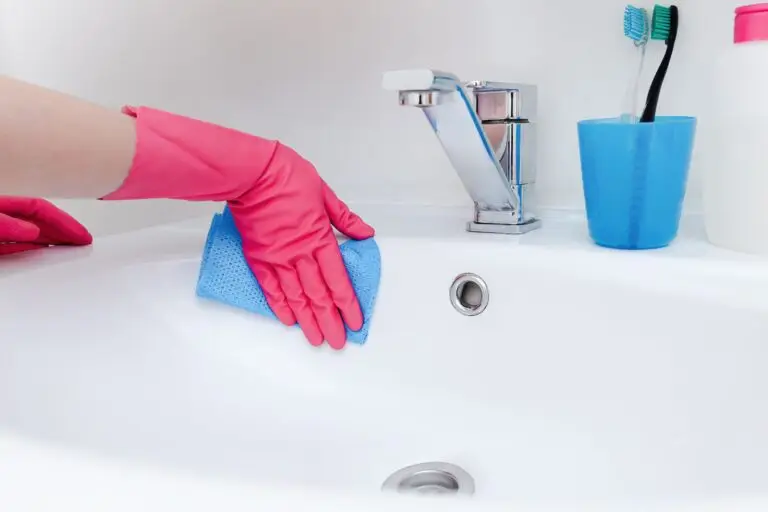
- Non-scratch sponge: A blue “non-scratch” scrub pad is safe for glass and helps lift stubborn soap crust.
- Vinegar and dish soap solution: A 50/50 mix of white distilled vinegar and grease-cutting dish soap is the “gold standard” for DIY shower cleaning.
- Squeegee for maintenance: The most important tool for preventing buildup between professional visits.
Step-by-Step: How to Clean Glass Shower Doors
Step 1: Apply cleaner and let it sit
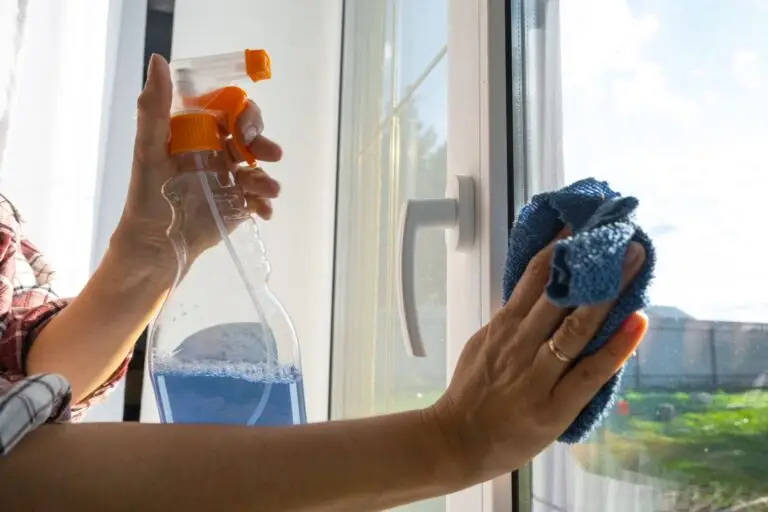
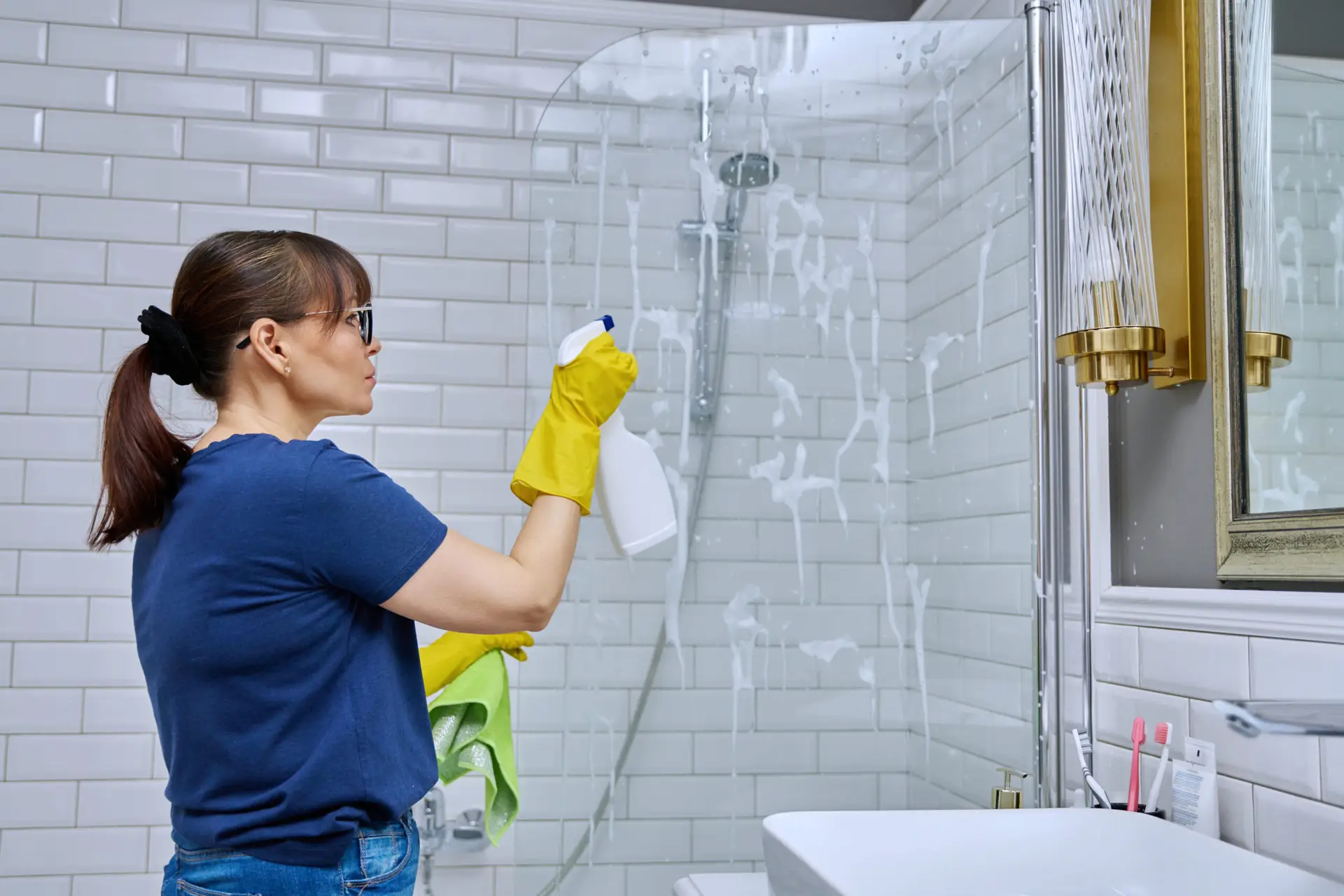
Spray your solution generously over the glass. Let it sit for 5 to 10 minutes. This “dwell time” does the hard work for you by softening the mineral deposits.
Step 2: Gently scrub soap scum
Use your non-scratch sponge to work in circular motions. Focus on the bottom of the door and near the handles, where buildup is typically heaviest.
Step 3: Rinse and wipe dry
Rinse the glass thoroughly with warm water. Immediately use a squeegee or a clean towel to remove the bulk of the water. Never let shower glass air-dry after cleaning.
Step 4: Buff for a streak-free finish
Take a fresh, dry microfiber cloth and buff the glass in a circular motion. This removes any microscopic residue and gives the glass that high-end, polished look.
How to Remove Hard Water Stains From Shower Glass
Mild acidic cleaners
If your glass has “white spots” that won’t budge, you are dealing with heavy calcium buildup. White vinegar or a specialized citric acid cleaner will dissolve these minerals. For very tough spots, a paste made of baking soda and a few drops of water can provide a very gentle abrasive action.
What to avoid on delicate finishes
Be extremely careful if your shower door has matte black or oil-rubbed bronze hardware. Acidic cleaners (like vinegar or lemon) can strip the finish off these metals. Always spray your cleaner onto the cloth first, rather than directly onto the door, to avoid dripping onto the hinges.
How to Keep Glass Shower Doors Clean Longer
- Use a squeegee after each shower: It takes 30 seconds but removes 90% of the water that causes spots.
- Improve bathroom ventilation: Run the exhaust fan for at least 20 minutes after a shower to reduce the humidity that allows mold and soap scum to thrive.
- Use light maintenance cleaning: A quick mist of a daily shower spray helps prevent the “crust” from forming between deep cleans.
Common Mistakes When Cleaning Shower Glass
- Using abrasive pads: Steel wool or green “heavy-duty” pads will create microscopic scratches in the glass that actually hold onto more dirt over time.
- Spraying too much product: Excess soap creates more suds, which are harder to rinse off and can lead to more streaking.
- Skipping the drying step: If you don’t dry the glass, you aren’t finished cleaning. Evaporating water is the primary cause of streaks.
FAQ: Cleaning Glass Shower Doors
What is the best homemade cleaner for glass shower doors?
A 1:1 ratio of white vinegar and Dawn dish soap is the most effective DIY solution used by homeowners across the U.S. to cut through both grease and minerals.
How do you remove cloudy buildup from shower glass?
Apply an acidic cleaner (vinegar or a commercial descaler), let it sit for 10 minutes, scrub with a non-scratch pad, and buff dry with microfiber.
Can vinegar damage shower doors?
Vinegar is safe for glass, but it can damage stone tiles (like marble or travertine) and certain metal finishes on the hardware. Always rinse thoroughly.
How often should glass shower doors be cleaned?
We recommend a deep clean once a week, but using a squeegee daily will make those weekly cleanings significantly faster.
Need Help With Bathroom Deep Cleaning?
Restoring a heavily neglected shower door is one of the most labor-intensive tasks in home maintenance. If your bathroom needs a professional “reset” to get back to its original sparkle, Harmony Cleaning is ready to help. Our deep cleaning specialists have the tools and expertise to tackle even the toughest soap scum and hard water stains.
Click Here to Get Your Free Personalized Cleaning Quote from Harmony Cleaning Today!