How to Clean Bathroom Countertops? A Gold Star Material Guide
Bathroom countertops are the stage for our daily self-care rituals, but they are also magnets for toothpaste residue, makeup spills, and hard water minerals. At Harmony Cleaning, we view your vanity as a Masterpiece of functional design that requires specialized care to remain pristine. In 2026, the “Gold Star” standard for countertop maintenance is rooted in material science—understanding that what cleans laminate could permanently ruin granite.
Quick Answer: Use Non-Abrasive Cleaners Based on Surface Type
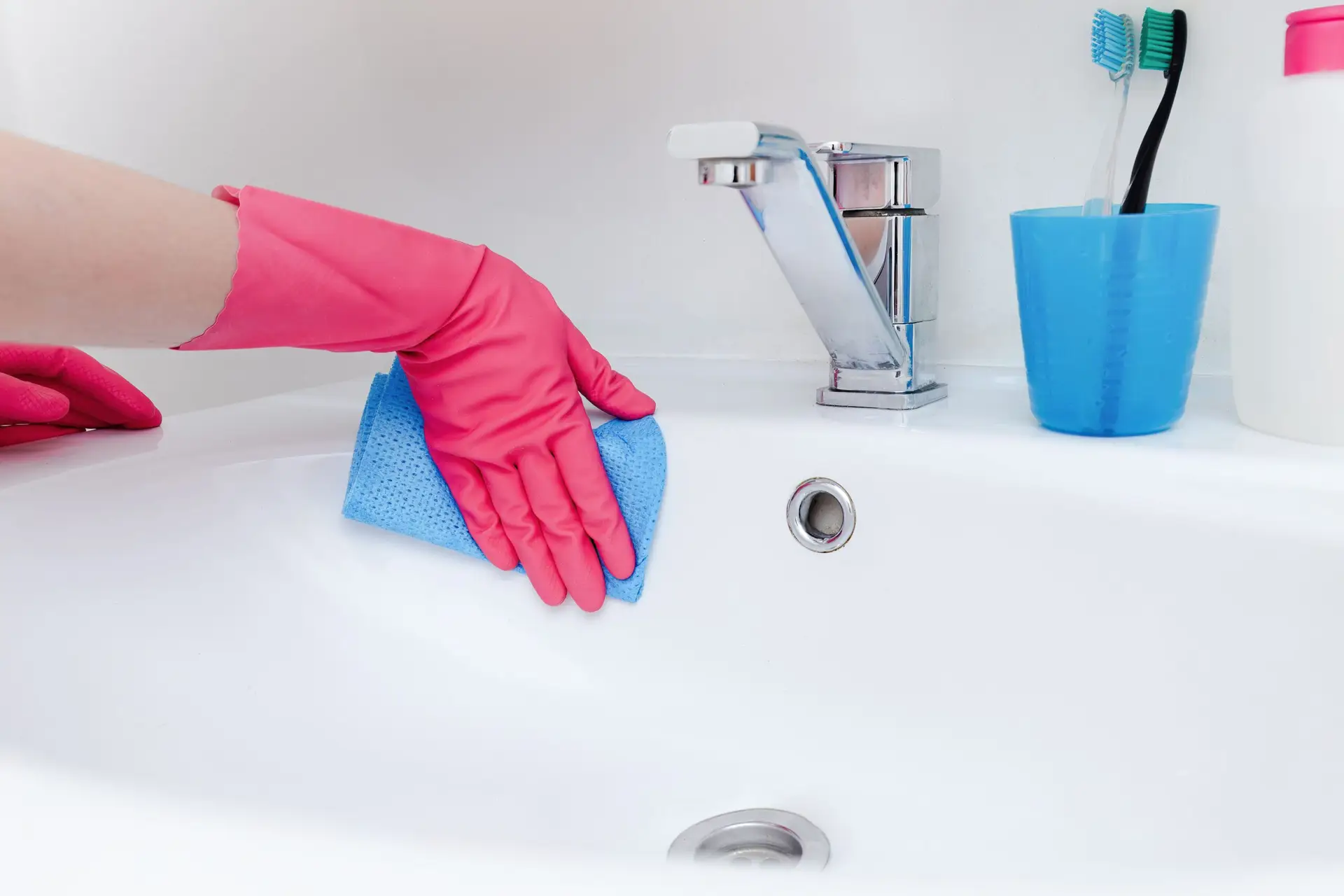
The most effective way to clean bathroom countertops is to use pH-neutral, non-abrasive cleaners specifically formulated for your material. For a “Gold Star” daily reset, a soft microfiber cloth dampened with warm water and a drop of mild dish soap is generally safe for all surfaces. Avoid generic “all-purpose” sprays containing bleach or vinegar unless you have verified they are safe for your specific stone or laminate, as acids can etch natural materials.
Cleaning by Material: The Specialist Selection
To achieve a Masterpiece result, you must tailor your chemistry to the physics of your countertop.
Granite and Natural Stone
Granite is porous and requires a “Gold Star” barrier (sealer) to prevent staining.
- The Specialist Method: Use a dedicated pH-neutral stone cleaner. If you have a stubborn water ring, a paste of baking soda and water left overnight can often “draw” the moisture out.
- Pro Tip: Never use vinegar or lemon juice; the acid will dull the polish through a process called etching.
Quartz (Engineered Stone)
Quartz is non-porous and highly durable, but it is sensitive to high heat and harsh chemicals.
- The Specialist Method: A simple mixture of warm water and dish soap is usually sufficient. For dried-on toothpaste, use a plastic scraper rather than a scrub brush.
- Pro Tip: Avoid high-pH cleaners (like oven cleaner or bleach), which can break down the resin bonds that hold the quartz together.
Laminate and Solid Surface
Laminate is resistant to many cleaners but can be damaged by excessive moisture at the seams.
- The Specialist Method: Use an all-purpose non-abrasive cleaner. For stains, a baking soda and water paste works wonders without scratching the plastic topcoat.
- Pro Tip: Keep the seams near the sink dry. If water seeps under the laminate, it can cause the particle board core to swell, ruining the Masterpiece look.
Daily Cleaning Tips: The Gold Star Routine
Maintaining a healthy, high-performance bathroom doesn’t have to be time-consuming. Follow this specialist protocol:
- The Squeegee Swipe: After your morning routine, use a dry microfiber cloth to wipe away water around the faucet. This prevents the “Masterpiece-ruining” buildup of limescale.
- Immediate Spill Response: Makeup, hair dye, and nail polish should be blotted immediately. The longer a pigment sits, the more likely it is to bond with the surface.
- The “Air Out” Method: After cleaning, ensure the bathroom is well-ventilated to allow the surfaces to dry completely, preventing the growth of “Gold Star” enemies like mold and mildew.
What to Avoid: Protecting Your Investment
- Abrasive Scouring Pads: Steel wool and green scrubbing pads will create microscopic scratches that trap bacteria and dull the shine.
- Bleach-Heavy Products: While great for disinfection, frequent use on stone can weaken sealers and discolor laminates.
- Acidic DIY Solutions: Vinegar is a household favorite, but its high acidity makes it dangerous for marble, granite, and travertine.
FAQ: Professional Surface Insights
How can I tell if my granite needs resealing?
The Water Test: Place a few drops of water on the counter. If the water beads up, your “Gold Star” seal is intact. If it soaks in and darkens the stone within 5 minutes, it’s time for a professional resealing.
Is it safe to use “Magic Erasers” on my vanity?
Generally, no. For high-gloss surfaces like polished stone or shiny laminate, the micro-abrasive nature of the eraser can leave a “dull” spot that is visible in the light. Stick to microfiber for a Masterpiece finish.
How do I remove hard water spots?
For non-stone surfaces, a 1:1 vinegar-water spray works well. For natural stone, use a specialized “Gold Star” hard water remover that is labeled as safe for marble and granite.
Experience the Harmony Standard
At Harmony Cleaning, we understand that your bathroom is a sanctuary. Our specialists are trained in the technical nuances of stone and surface care, ensuring your countertops remain a Masterpiece of sanitation and beauty. We provide the Gold Star attention to detail that preserves your home’s value and your family’s health.
- Material-Specific Experts: We know exactly which products are safe for your home.
- Residue-Free Results: No streaks, no films, just a perfect shine.
- The Harmony Standard: A higher level of clean for a higher quality of life.
Is your bathroom vanity losing its luster? Contact Harmony Cleaning today for a specialist deep clean and let us bring the Gold Star glow back to your Masterpiece home!