How to Clean a Glass Table Without Streaks: The Ultimate Expert Guide
Glass tables are a hallmark of sophisticated interior design, offering a sleek, airy aesthetic that complements any room. However, they are also notorious for magnifying every speck of dust, oil smudge, and water spot. Achieving that “invisible” glass look is not just about the product you use—it is about the technique and the tools you employ.
At Harmony Cleaning, we maintain hundreds of high-end surfaces across the country. Our secret to crystal-clear glass isn’t a proprietary chemical; it’s a disciplined maintenance protocol.
Why Glass Tables Show Dust, Smudges, and Streaks So Easily
Glass is non-porous, meaning it does not absorb liquids or oils. When you touch a glass table, your skin’s natural oils stay exactly where you placed them. When dust settles, it sits on a smooth, reflective plane, catching the light from every angle. Streaks occur when cleaning agents are left to air-dry or when the residue of a previous cleaner is redistributed rather than removed.
Best Supplies for Cleaning a Glass Table
The wrong tool is the most common cause of a dull, streaky finish.
Microfiber Cloths vs. Paper Towels
- Microfiber Cloths (Winner): High-quality, tightly woven microfiber lifts and traps oils and dust within its fibers. For the best finish, use a dedicated “glass-polishing” microfiber cloth that is specifically designed to be lint-free.
- Paper Towels: Generally discouraged. They are porous and often leave tiny paper fibers (lint) behind. Furthermore, many contain wood pulp or additives that can leave a hazy residue.
Store-Bought Glass Cleaner vs. Homemade Solution
Professional-grade foam cleaners are excellent because they don’t run, allowing you to control the application. However, a simple homemade solution of distilled water and white vinegar is often the preferred choice of experts because it evaporates cleanly without leaving chemical residues that attract new dust.
What to Avoid on Glass Surfaces
- Ammonia-based cleaners: These can damage the integrity of glass over time and potentially ruin the finish of wooden or metal frames surrounding the glass.
- Abrasive Scourers: Steel wool and rough sponges will permanently scratch glass, creating a “cloudy” look that cannot be reversed.
Step-by-Step: How to Clean a Glass Table
Follow this professional protocol for a showroom-quality finish:
- Remove Loose Debris: Never spray a cleaner directly onto a dusty table. The liquid turns dust into a “slurry” that will streak and may even create micro-scratches. Use a dry, clean microfiber cloth to gently sweep away crumbs and dust first.
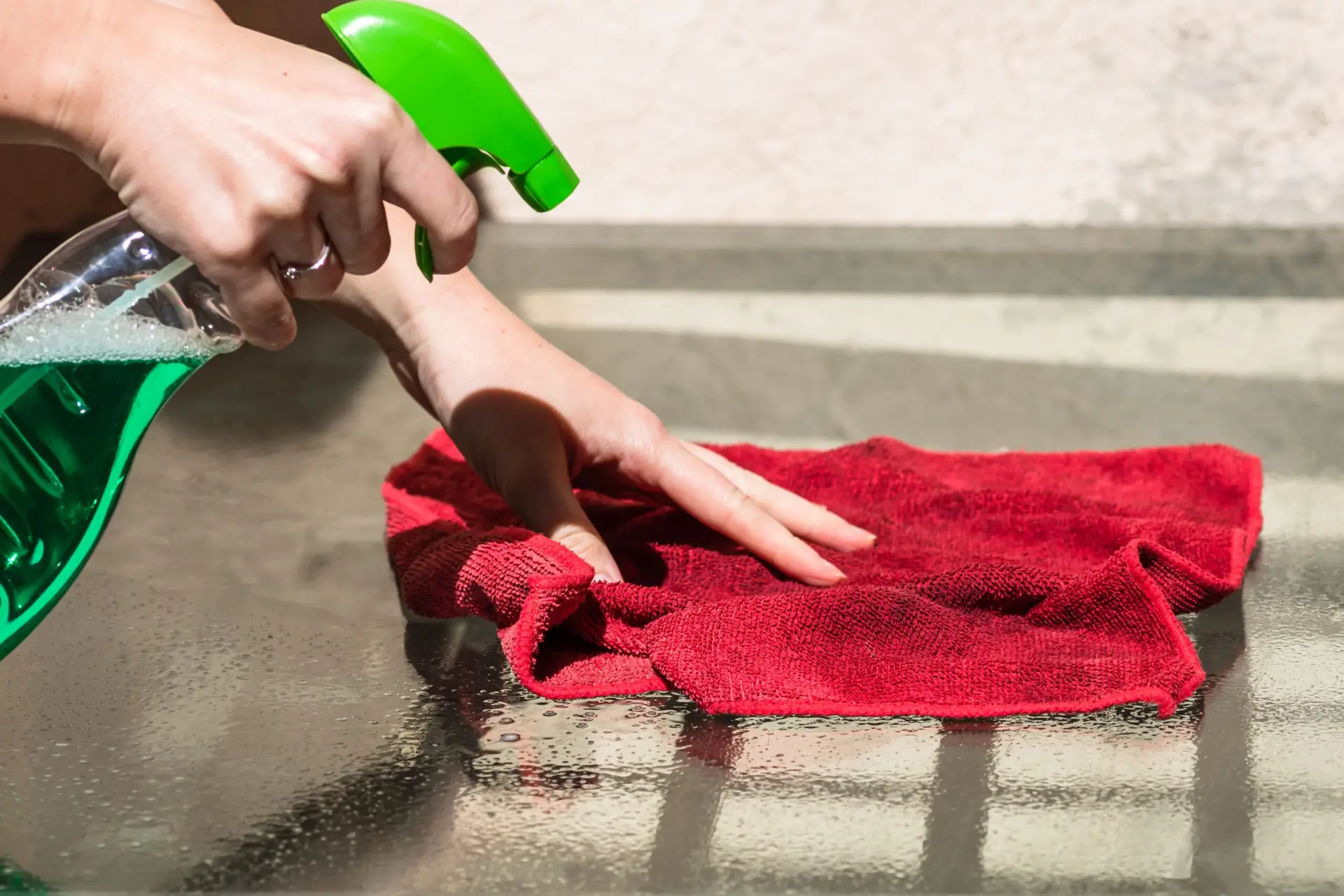
- Light Application: Less is more. A light misting of your chosen solution is sufficient. Do not oversaturate the glass, as excess liquid will pool at the edges and potentially damage furniture joints.
- Wipe in a Consistent Direction: Use long, overlapping strokes—either horizontally or vertically. This keeps your cleaning path organized, ensuring you don’t miss any spots.
- The Professional Buff: Once the surface is clean, take a second, completely dry microfiber cloth. Buff the surface in gentle circular motions to absorb any remaining moisture. This final step is what eliminates streaks.
Best Homemade Cleaner for Glass Tables
For a safe, streak-free DIY solution:
- Vinegar Solution: Mix 1 part distilled white vinegar with 2 parts distilled water. The acetic acid in vinegar cuts through kitchen grease and oily fingerprints without the sticky residue found in many commercial sprays.
- The Alcohol Boost: If you are dealing with stubborn fingerprints or a particularly greasy coffee table, add a splash (roughly 10%) of isopropyl alcohol to your vinegar mixture. This helps the solution evaporate faster, further reducing the chance of streaks.
How to Remove Cloudy Film From a Glass Table
If your table looks permanently “hazy,” it likely has a buildup of cleaning product residue, hard water minerals, or a layer of cooking grease.
- The Acid Soak: If the haze is mineral-based, dampen a microfiber cloth with pure white vinegar and lay it over the affected area for 5–10 minutes to loosen the minerals.
- The Deep Clean: Wipe it away with a clean, damp cloth, then follow up with your standard glass-cleaning protocol. If the haze persists, the glass may be “etched” (micro-scratched), which usually requires professional glass polishing or replacement.
How Often Should You Clean a Glass Table?
- Daily: A quick “dry wipe” with a clean microfiber cloth takes 30 seconds and prevents the buildup of daily dust.
- Weekly: A full wet cleaning using your preferred glass cleaner.
- Monthly: A detailed inspection, including the underside of the table, which often accumulates more dust than the top.
Common Mistakes That Leave Glass Looking Dirty
- Cleaning in Direct Sunlight: The sun heats the glass, causing the cleaner to evaporate before you can wipe it off, leaving streak patterns.
- Using the Same Cloth for Everything: Using a cloth that has been used for other household chores will transfer microscopic bits of grease or dust to your glass. Use a dedicated “glass-only” cloth.
- Spraying the Frame: Always spray your cloth, not the table, to protect the structural frame from moisture damage.
When Professional House Cleaning Helps Maintain Glass Furniture
Glass requires a high level of vigilance. If your schedule doesn’t permit a weekly deep-cleaning session, consider a professional service. Professionals use industrial-grade, lint-free polishing tools and specialized techniques that reach the corners and undersides of furniture that homeowners often miss, ensuring your glass maintains its “like-new” clarity indefinitely.
FAQ
What is the best way to clean a glass table?
The best way is to use a light mist of a 50/50 vinegar-water solution and a high-quality, lint-free microfiber cloth, followed by a dry buffing step.
How do you clean a glass table without streaks?
The trick is to avoid over-spraying, work in sections, and use a final, dry microfiber cloth to buff the glass dry immediately after cleaning.
Can vinegar clean a glass table?
Yes, it is highly effective. Vinegar cuts through grease and oils, evaporates cleanly, and is non-toxic.
Why does my glass table look cloudy after cleaning?
Usually, this is due to either product buildup from inferior cleaners or hard water minerals. A deep cleaning with a vinegar solution or a slightly acidic cleaner often solves this.
Can you use paper towels on a glass table?
It is not recommended. Paper towels often leave lint, which creates a hazy appearance and makes streaks more visible.
Your Home Deserves a Crystal-Clear Finish
Tired of constantly fighting smudges and streaks? Let Harmony Cleaning bring the brilliance back to your furniture. Our team uses expert-grade tools to ensure every glass surface in your home is spotless.
Click here to get your custom cleaning quote from Harmony Cleaning!