How to Clean Bathroom Tile and Grout?
The bathroom is the most challenging room to keep pristine. Between soap scum, water scale, and the inevitable growth of mold and mildew in damp, warm environments, your tile and grout can quickly lose their brilliance.
At Harmony Cleaning Services, we treat tile and grout as the “foundation” of bathroom hygiene. When your grout lines are discolored, the entire room feels neglected, even if the counters are spotless. Here is your expert guide to restoring your bathroom tile to a professional-grade clean.
Why Bathroom Tile and Grout Get Dirty
Bathroom grout is highly porous, making it a “sponge” for everything it touches.
- Soap Scum: A mix of soap residue and minerals from your water that creates a sticky, waxy film on tiles.
- Mold & Mildew: Bathrooms are humid, and grout provides the perfect, textured surface for mold spores to latch onto and thrive.
- Mineral Deposits: If you have hard water, calcium and magnesium deposits will create a white, hazy haze over your tiles that builds up over time.
Best Cleaners for Bathroom Tile and Grout
- Baking Soda Paste: The ultimate mild abrasive. Mix baking soda with a little water until it forms a thick paste. It’s perfect for lifting stuck-on soap scum without scratching the tile surface.
- Hydrogen Peroxide Solutions: A fantastic, natural alternative to harsh chemicals. It is a powerful oxidizer that helps whiten grout and kill mold spores on contact.
- Commercial Grout Cleaners: For heavy-duty cases, use a pH-neutral, oxygen-based cleaner. These are much safer for your tiles and your lungs than heavy-duty acidic cleaners.
How to Clean Shower Tile Step by Step
- Apply the Cleaner: Apply your baking soda paste or a specialized oxygen-based cleaner to the tiles and grout.
- Dwell Time: Let the solution sit for 15–20 minutes. This allows the cleaner to break the chemical bond between the grime and the surface.
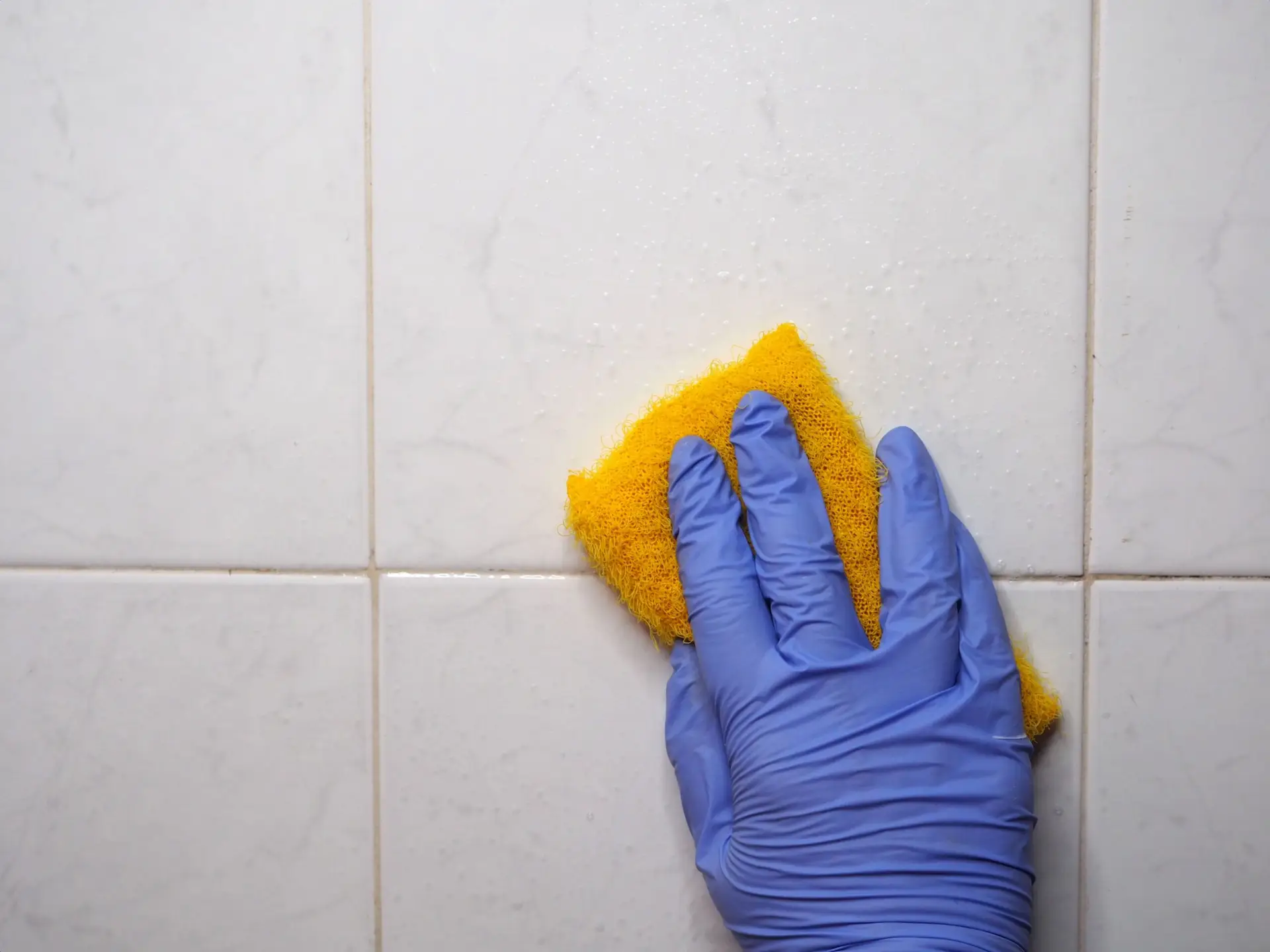
- Scrub: Use a medium-soft brush—never a metal wire brush—to scrub the grout lines in circular motions.
- Rinse: Rinse thoroughly with warm water.
- Dry: This is the pro step. Wipe the tile surface with a dry microfiber cloth. If you leave water on the tiles, you invite the same mineral deposits to return instantly.
How to Clean Floor Tile Grout
Floor grout is subjected to more foot traffic and dirt tracking than shower grout.
- The Method: Use a vacuum with a soft brush attachment first to remove all dry grit. If you don’t vacuum first, mopping will just turn the dirt into “mud” that settles deeper into your porous grout lines. Follow with a damp mop using a neutral floor cleaner, then hand-scrub heavily stained lines with your hydrogen peroxide paste.
How to Prevent Mold and Soap Scum
- Squeegee After Every Shower: This is the #1 way to stop soap scum and mineral buildup. It removes 90% of the water before it can evaporate and leave deposits.
- Increase Ventilation: Always run your exhaust fan during your shower and for at least 20 minutes after.
- Daily Spray: Use a “daily shower mist” that prevents soap residue from sticking to surfaces.
When Grout Needs Sealing or Professional Cleaning
Grout should be sealed every 1–2 years. If water beads up on your grout lines, they are sealed. If the water soaks in and darkens the grout, it is unsealed and vulnerable. If your grout is permanently stained, crumbling, or has deep-seated black mold that doesn’t respond to scrubbing, it is time to call the experts. At Harmony Cleaning Services, we use specialized equipment to flush out deeply embedded contaminants that household tools simply cannot reach.
FAQ
What is the best grout cleaner for bathrooms?
A combination of baking soda and hydrogen peroxide is the gold standard for natural cleaning. It whitens, disinfects, and lifts stains without the risks associated with bleach.
How do you clean shower grout naturally?
Apply a paste of baking soda and water to the lines, then spray it with hydrogen peroxide. Let it sit for 20 minutes, scrub gently, and rinse clean.
Does bleach damage grout?
Yes. Frequent use of bleach can cause grout to become brittle, crack, and yellow over time. It also doesn’t “clean” mold; it just bleaches the color out, often leaving the live mold spores behind.
How often should bathroom grout be cleaned?
Perform a light wipe-down weekly to prevent buildup. A deep scrub should be performed every 3 to 6 months to maintain hygiene and appearance.
Is your bathroom grout looking less than sparkling? At Harmony Cleaning Services, we provide expert tile and grout deep-cleaning that refreshes your bathroom and protects your surfaces for the long term.
Contact Harmony Cleaning Services today to book your professional bathroom refresh!