How to Clean Upholstered Dining Chairs Safely at Home?
Upholstered dining chairs bring warmth and comfort to your table, but they are magnets for everything from accidental wine spills to stubborn food crumbs. Because these chairs are in constant use, knowing how to refresh them without damaging the fabric is an essential life skill.
At Harmony Cleaning, we know that fabric maintenance is all about control. The goal is to lift the dirt without over-wetting the cushion, which can lead to water rings or, worse, mold in the padding. Here is our expert guide to safely cleaning your chairs at home.
Quick Answer: The Safest Cleaning Approach
The safest approach is the “Dry-First, Damp-Second” method. Start with a thorough vacuuming of all seams and crevices to remove loose debris. Then, use a mild dish soap and water solution (or a specialized upholstery foam) applied to a clean cloth, not the chair itself. Gently blot the stain—never scrub—and use a dry cloth to absorb as much moisture as possible to ensure rapid drying.
Check the Fabric Care Label First
Before you reach for a single cleaning product, find the manufacturer’s care tag (usually hidden under the seat). Look for these crucial codes:
- W: Water-based cleaners are safe.
- S: Use solvent-based (dry-clean only) cleaners. Do not use water.
- WS: Both water and solvent cleaners are safe.
- X: Do not clean with water or solvents; professional vacuuming only.
Supplies You Need
- Vacuum cleaner with an upholstery brush attachment.
- Mild dish soap (clear/transparent is best).
- White vinegar (for odor and light stains).
- Distilled water (to avoid mineral deposits from tap water).
- Microfiber cloths (clean and white).
- Soft-bristled brush (for stubborn dirt).
Step-by-Step Routine Cleaning Process
1. Vacuum Crumbs and Dust
Dining chairs are notorious for trapping crumbs in the seams where the seat meets the backrest. Use your vacuum’s crevice tool to get deep into the upholstery. If you skip this, you’ll just be pushing dust deeper into the fabric when you start cleaning.
2. Spot Test
This is non-negotiable. Apply your cleaning solution to an inconspicuous area (like the underside of the seat). Wait for it to dry completely to ensure the color doesn’t bleed or the fabric doesn’t warp.
3. Treat Light Stains
Mix one teaspoon of mild dish soap into two cups of distilled water. Dip a clean white cloth into the mixture and wring it out until it is barely damp. Blot the stain from the outside in—this prevents the stain from spreading.
4. Rinse and Dry
Take a second cloth dampened only with distilled water and blot the area to “rinse” away any soapy residue. Finally, use a dry, clean cloth to press firmly on the area to absorb the moisture. Let the chair air-dry in a well-ventilated room or near a fan.
Handling Food Spills and Odors
- For Fresh Spills: Use a paper towel to absorb the liquid immediately. Do not rub.
- For Odors: Sprinkle a thin layer of baking soda over the fabric. Let it sit for at least 30 minutes to absorb odors, then vacuum it away thoroughly.
- For Greasy Food: If you have a butter or oil stain, blot it with a dry cloth, then apply a tiny amount of baking soda to absorb the grease. Vacuum after 20 minutes before attempting a spot clean.
What Not to Use
- Bleach or Ammonia: These will likely permanently discolor or weaken the fabric fibers.
- Colored Cloths: Always use white cloths to avoid “dye transfer” from your rag to your chair.
- Heat (Hairdryers): Never use a hairdryer to speed up drying. High heat can set a stain permanently or melt synthetic fabric fibers.
How Often to Clean
- Weekly: A quick vacuuming of the seat seams prevents crumb buildup.
- Quarterly: A light wipe-down of the fabric surfaces.
- Annually: A deep clean or professional refresh, especially for high-use chairs.
When to Call a Pro
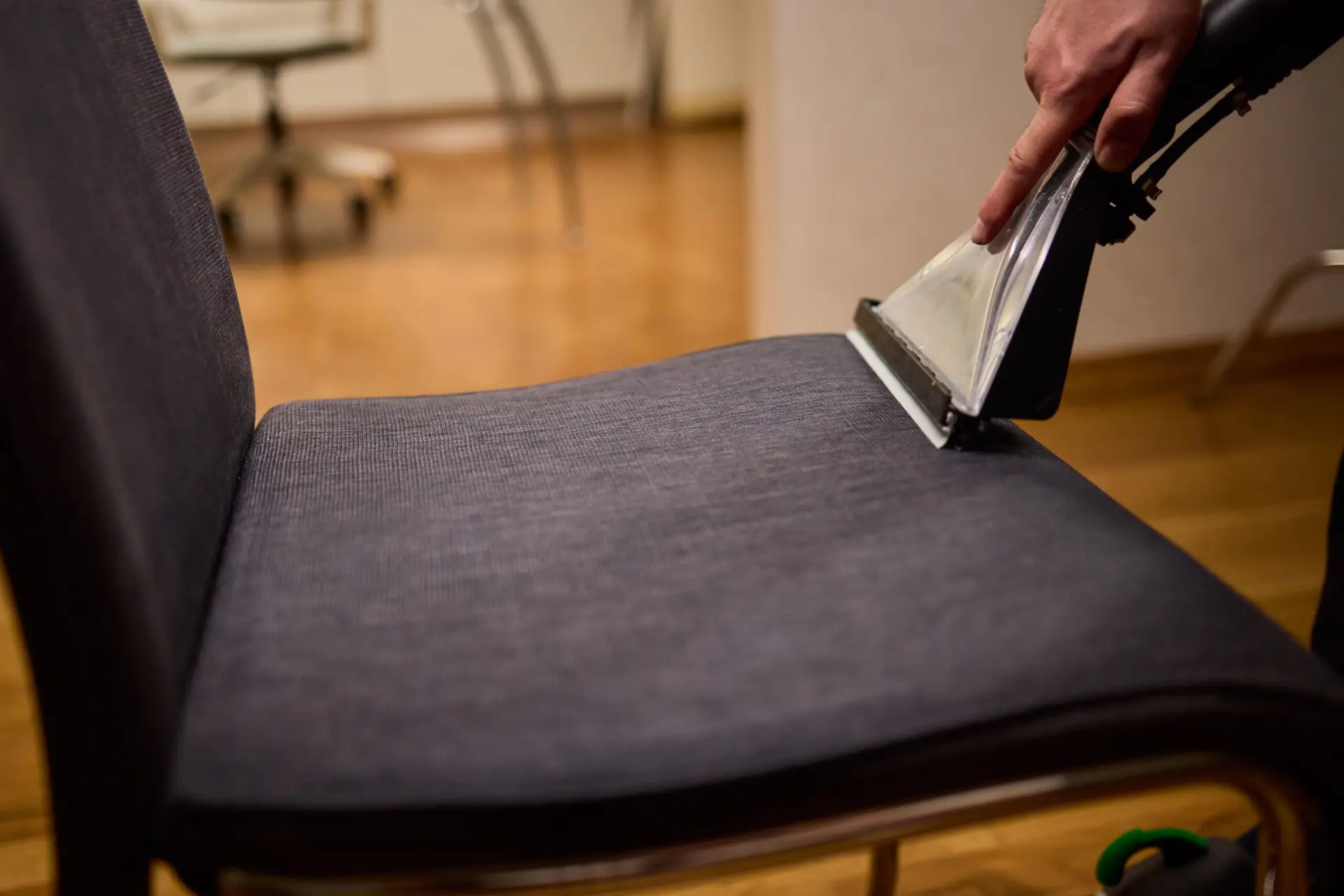
If your chairs are made of delicate materials like silk, linen, or vintage velvet, or if the care tag says “S” or “X,” skip the DIY approach. Professional upholstery cleaning involves specialized extraction machines that remove deep-seated soil without over-wetting, protecting the integrity of expensive fabrics that a simple soap-and-water mix could ruin.
FAQ
- Can you use carpet cleaner on upholstered dining chairs? Generally, no. Carpet cleaners are often too harsh and leave behind sticky residues that attract even more dirt.
- How do you remove food stains from fabric chairs? Blot with a mixture of mild dish soap and distilled water. Work from the outside of the stain toward the center.
- How often should dining chairs be cleaned? Weekly vacuuming keeps them fresh, with a full spot-clean every 3–6 months.
- How do you clean upholstered chairs without soaking them? Always apply the cleaner to your cloth, not directly to the chair, and never use more moisture than the fabric can absorb in a few minutes.
Protect your furniture investment. When DIY just isn’t enough, Harmony Cleaning is here to restore your dining set to its former glory. Contact us today to schedule your upholstery refresh!
Want to keep your whole home looking new? Explore our Comprehensive Deep Cleaning Services.