Best Way to Clean Kitchen Appliances Inside and Out
A clean kitchen is the heart of a healthy home, but appliances are often the most neglected surfaces. Grease, food splatters, and mineral buildup don’t just look messy—they can affect your appliances’ performance, energy efficiency, and lifespan.
At Harmony Cleaning, we believe in a methodical approach that prioritizes hygiene without compromising the finish of your high-end appliances. Here is our expert guide to mastering your kitchen appliance routine.
Quick Answer: What to Clean First
Always start with “top-to-bottom” and “inside-out” logic. Begin by clearing out and cleaning the refrigerator interior, as it involves food safety. Then, move to the microwave (letting steam do the heavy lifting), followed by the stove/oven, and finally, the exteriors. Always save the stainless steel polishing for last to avoid getting cleaner overspray on surfaces you’ve already wiped down.
Why Appliance Cleaning Matters
- Hygiene: Refrigerators and microwaves are high-risk areas for bacteria growth and cross-contamination.
- Performance: A clean dishwasher filter ensures efficient drainage; a clean oven heats more evenly; a dust-free refrigerator compressor runs more efficiently (saving you money on energy).
- Longevity: Preventing grease from “baking” onto surfaces or settling into vents prevents permanent damage to your appliance finishes.
Essential Supplies
- Microfiber Cloths: Use separate, color-coded cloths for interior (food-safe) and exterior (polishing) tasks.
- Mild Dish Soap: The gold standard for almost all interior surfaces.
- White Vinegar & Baking Soda: Your go-to for natural degreasing and deodorizing.
- Soft, Non-Abrasive Sponges: To prevent scratching delicate glass or stainless surfaces.
- Stainless Steel Cleaner: Or a specific manufacturer-recommended spray. Avoid harsh abrasives or “all-purpose” sprays that might contain bleach.
Cleaning Appliance Exteriors
Handles, Buttons, and Touch Panels
These are your kitchen’s “germ hot spots.” Use a slightly damp microfiber cloth with mild soap to wipe down buttons, knobs, and handles daily. Avoid spraying cleaner directly onto digital displays; spray the cloth first to prevent liquid from seeping into the electronics.
Stainless Steel Surfaces
Always identify the grain of your stainless steel (look for the faint lines running horizontally or vertically). Wipe with the grain, not against it. Use warm soapy water for general dirt, then finish with a dedicated stainless steel polish or a tiny amount of mineral oil to restore the shine.
Cleaning Appliance Interiors
- Refrigerator: Remove all food and shelves. Soak removable bins in warm, soapy water. Wipe interior walls with a mixture of water and a tiny bit of baking soda to neutralize odors. Never use bleach inside a fridge—the residual smell can permeate your food.
- Microwave: Place a bowl of water with a few lemon slices or a splash of vinegar inside and run it on high for 3 minutes. The steam will loosen stubborn splatters, allowing you to wipe them away with a damp cloth effortlessly.
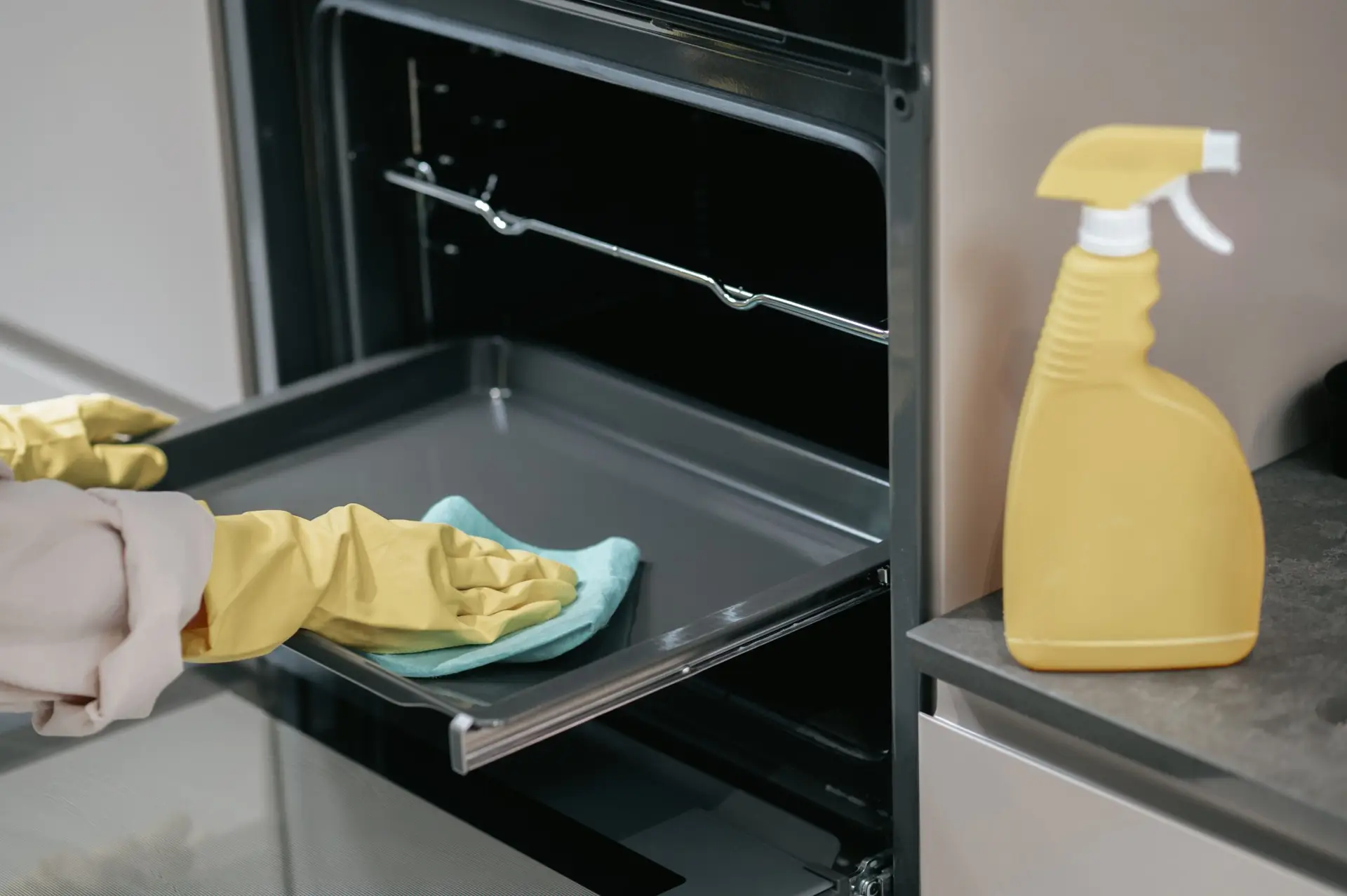
- Oven: For non-self-cleaning ovens, create a paste of baking soda and water. Apply it to the interior (avoiding heating elements) and let it sit overnight. Wipe clean the next day.
- Dishwasher: Check the filter at the bottom—this is the #1 cause of odors. Rinse it under hot water with an old toothbrush. Run an empty cycle with a bowl of white vinegar on the top rack to descale the interior.
Common Cleaning Mistakes to Avoid
- Using Abrasive Scourers: Steel wool or harsh sponges can permanently scratch stainless steel and glass cooktops.
- Spraying Directly on Panels: Liquid can seep into buttons and sensors, causing short circuits.
- Ignoring the “Hidden” Spots: Vents, rubber gaskets (especially in fridges and dishwashers), and the undersides of handles are often forgotten, becoming prime breeding grounds for mold and grime.
- Using Harsh Chemicals: Bleach and ammonia can discolor stainless steel and leave chemical residues that are unsafe near your food.
Recommended Cleaning Schedule
- Daily: Wipe down stovetops and high-touch handles.
- Weekly: Clean the microwave interior and wipe down appliance exteriors.
- Monthly: Clean the dishwasher filter, wipe down refrigerator seals, and run a descaling cycle for coffee makers.
- Quarterly: Deep clean the refrigerator interior and oven.
- Annually: Vacuum behind and beneath heavy appliances to remove dust buildup from coils.
When to Call the Pros
If your appliances are showing signs of heavy grease buildup that won’t budge, or if you are preparing for a major event or a seasonal reset, it’s time for a deep clean. At Harmony Cleaning, we include appliance “freshening” in our standard deep cleaning packages, ensuring we reach the areas you can’t—like the dust on your refrigerator coils or the grime trapped in your range hood filters.
FAQ
- How often should kitchen appliances be cleaned? High-touch surfaces daily; deep cleans of the interior every 3 months is a safe professional standard.
- What is the safest way to clean stainless steel appliances? Warm water and a drop of mild dish soap, wiped in the direction of the grain.
- Should you clean inside appliances before a house cleaning? Yes, it helps the cleaners focus on sanitizing and polishing rather than clearing out expired food or degreasing.
- What appliances take the longest to deep clean? The oven and refrigerator, due to the volume of parts (racks, drawers) and the intensity of the grease buildup.
Ready for a kitchen that truly shines?
Let the experts at Harmony Cleaning handle the heavy lifting. Book your next deep cleaning visit today!