How to Remove Hard Water Stains From Bathroom Fixtures?
Quick Answer: Soften Mineral Buildup Before Wiping
The most effective way to remove hard water stains from bathroom fixtures is to apply a mild acid like white vinegar or lemon juice to dissolve the alkaline mineral deposits, let it sit to soften the buildup, and wipe clean with a soft microfiber cloth. Regular treatment prevents thick, crusty calcium and lime scale from ruining the polished look of your faucets and showerheads.
What Causes Hard Water Stains?
Mineral Deposits
Soap Residue
Standing Water on Fixtures
Hard water contains high concentrations of dissolved minerals, primarily calcium and magnesium. When water splashes onto your chrome, brass, or nickel fixtures and evaporates, it leaves behind a chalky, cloudy crust. When these minerals combine with body oils and soap scum, they form stubborn white or hazy spots that resist standard water wipe-downs.
How to Clean Faucets and Handles
Finish note: separate chrome, brushed nickel, brass, and matte black fixtures.
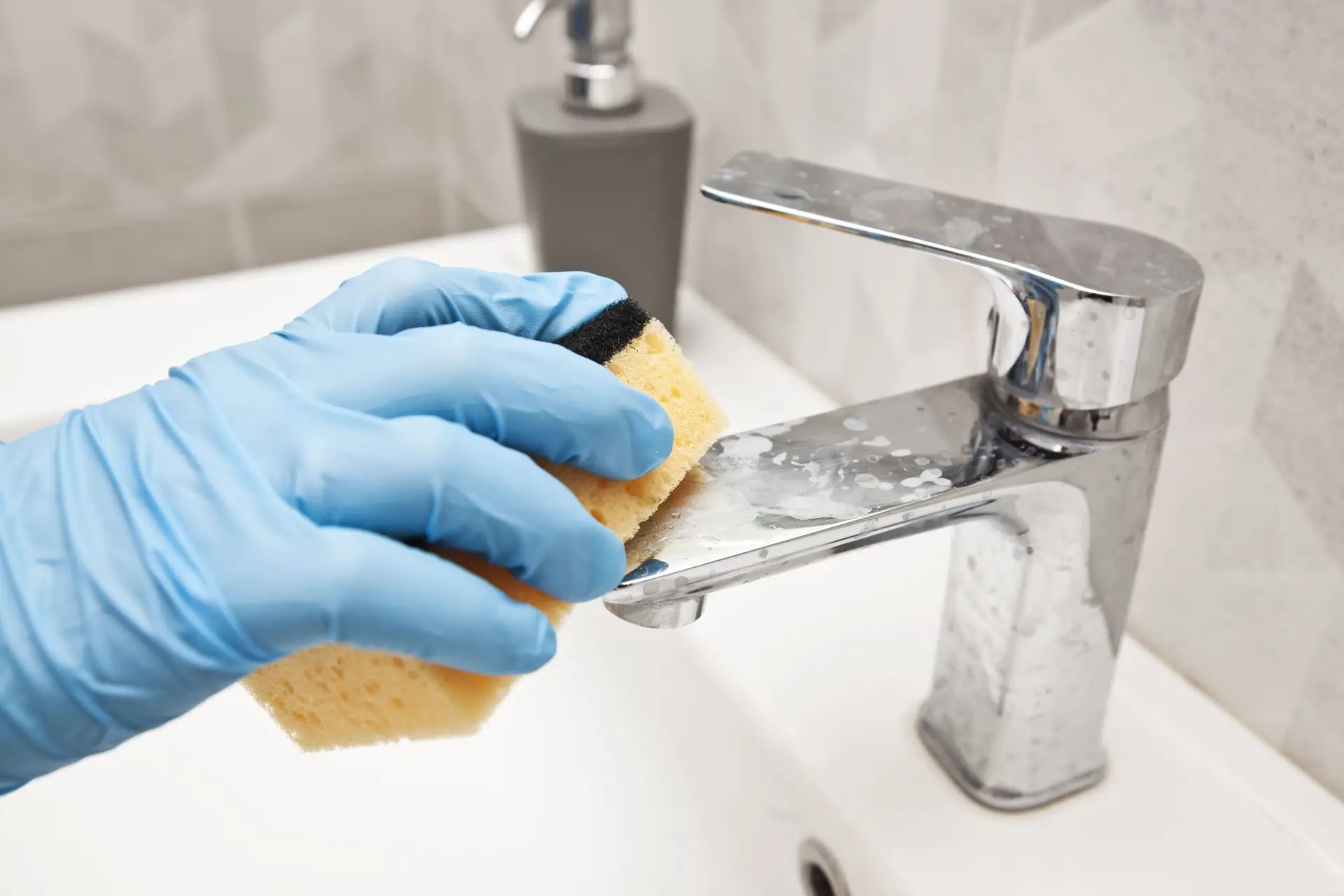
To clean faucets without scratching or stripping their protective coatings, match your technique to your hardware finish:
- Chrome and Stainless Steel: Generally tough and resilient; soaking with a 50/50 mixture of warm water and white vinegar quickly dissolves mineral rings.
- Brushed Nickel and Polished Brass: These finishes often feature a delicate protective clear coat. Avoid harsh scouring pads and limit acid soaking time to 5–10 minutes before rinsing.
- Matte Black and Oil-Rubbed Bronze: Highly sensitive to abrasive scrubbing and strong acids. Use a mild dish soap solution or diluted vinegar, and dry immediately to prevent discoloration.
For related glass surfaces clouded by the same mineral issues, explore our guides on How to Remove Water Stains From Glass and finding the Best Cleaner for Glass Shower Doors.
How to Clean Showerheads
When to Soak the Showerhead
When to Use a Soft Brush
Mineral buildup inside showerhead nozzles can redirect water streams or clog them entirely. If your showerhead is detachable, submerge it in a bowl of warm white vinegar for 30 to 60 minutes. If it is fixed to the wall, fill a plastic bag with white vinegar, secure it around the showerhead with a rubber band, and let it soak overnight. Afterward, turn on the water to flush out loosened debris and gently scrub the rubber nozzles with an old toothbrush.
What Products Should You Avoid?
Abrasive Pads
Harsh Acids on Delicate Finishes
Never use steel wool, abrasive scouring powders, or harsh industrial chemicals like muriatic acid on bathroom fixtures. These aggressive materials permanently scratch metal finishes, strip decorative coatings, and expose the underlying base metal to rapid corrosion.
How to Prevent Hard Water Spots
The easiest way to keep fixtures sparkling is to prevent minerals from baking onto the surface. Keep a microfiber cloth handy and quickly wipe down your faucets and shower handles after your final shower of the day.
Partnering with Professional Cleaning Services
Service angle: connect fixture care to bathroom deep cleaning.
Internal linking note: use shower glass, water stains, and grout anchors.
Maintaining a truly pristine bathroom requires addressing more than just the fixtures. While sparkling faucets elevate the room, surrounding tile grout and shower enclosures need equal attention—discover how to tackle discolored lines with our guide on Bathroom Floor Grout Cleaner. When soap scum and mineral haze accumulate across multiple surfaces, scheduling a professional deep clean ensures your entire bathroom is restored to a spotless, refreshed finish.
FAQ
What removes hard water stains from bathroom fixtures?
White vinegar or diluted lemon juice are natural, highly effective solutions. The mild acetic or citric acid breaks down the alkaline calcium and magnesium bonds, allowing you to wipe away mineral scale effortlessly.
Can vinegar damage chrome fixtures?
Brief contact with white vinegar is completely safe for chrome. However, leaving vinegar to soak on lower-quality or worn-out plating for hours can occasionally dull the finish, so rinse thoroughly after 15 to 30 minutes.
How often should bathroom fixtures be cleaned?
Give your fixtures a quick wipe down weekly during your normal cleaning routine, and perform a deep vinegar soak every 4 to 6 weeks to prevent heavy mineral buildup.