How to Clean Kitchen Cabinets? A Professional Degreasing Guide
Kitchen cabinets occupy the most visual space in your kitchen, yet they are often the most neglected during a daily wipe-down. Because they sit near your stove and oven, they are constantly bombarded with microscopic grease particles and steam. Over time, this creates a “tacky” film that traps dust. In 2026, the best way to preserve your cabinetry is through gentle, frequent degreasing rather than harsh scrubbing.
Quick Answer: Use a Mild Cleaner and a Soft Microfiber Cloth
For 95% of kitchen cabinets (painted, stained, or laminate), the safest and most effective method is using warm water mixed with a few drops of grease-cutting dish soap. A soft microfiber cloth is essential to lift the grime without scratching the protective topcoat. Always dry the surface immediately to prevent moisture from seeping into the wood joints.
What You Need to Clean Cabinets
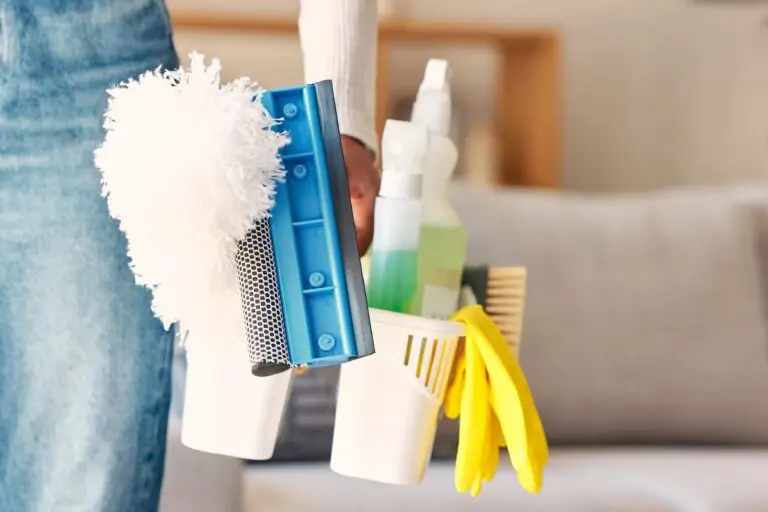
Before you start, gather these professional-grade supplies:
- Microfiber Cloth: Its tiny fibers reach into the wood grain better than a standard paper towel.
- Mild Soap Solution: Clear dish soap (like Dawn) is a powerful, pH-neutral degreaser.
- Degreaser (for heavy buildup): A specialized, cabinet-safe citrus cleaner for those stubborn spots near the range hood.
- Dry Towel: A fresh lint-free towel for the final buffing.
Step-by-Step Cleaning Process
Step 1 – Dust Cabinets
Use a dry microfiber cloth or a vacuum with a soft brush attachment to remove loose dust and crumbs from the door fronts, molding, and the tops of the cabinets. Removing dry debris first prevents “smearing” once you add liquid.
Step 2 – Wipe With Cleaner
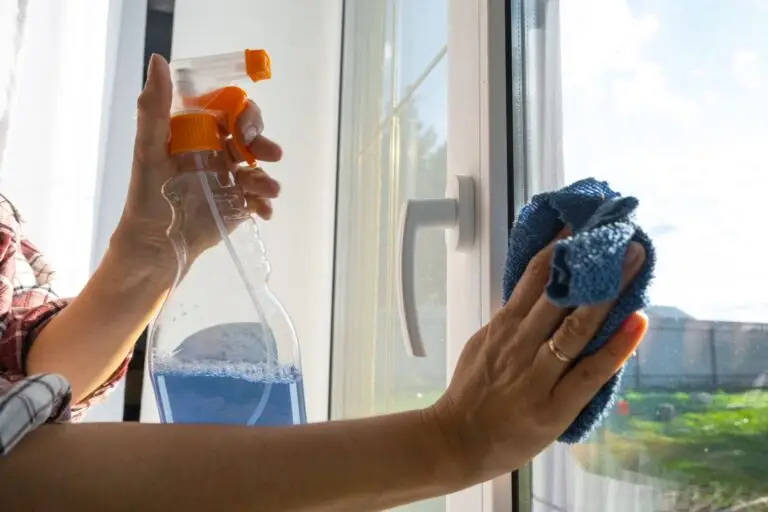
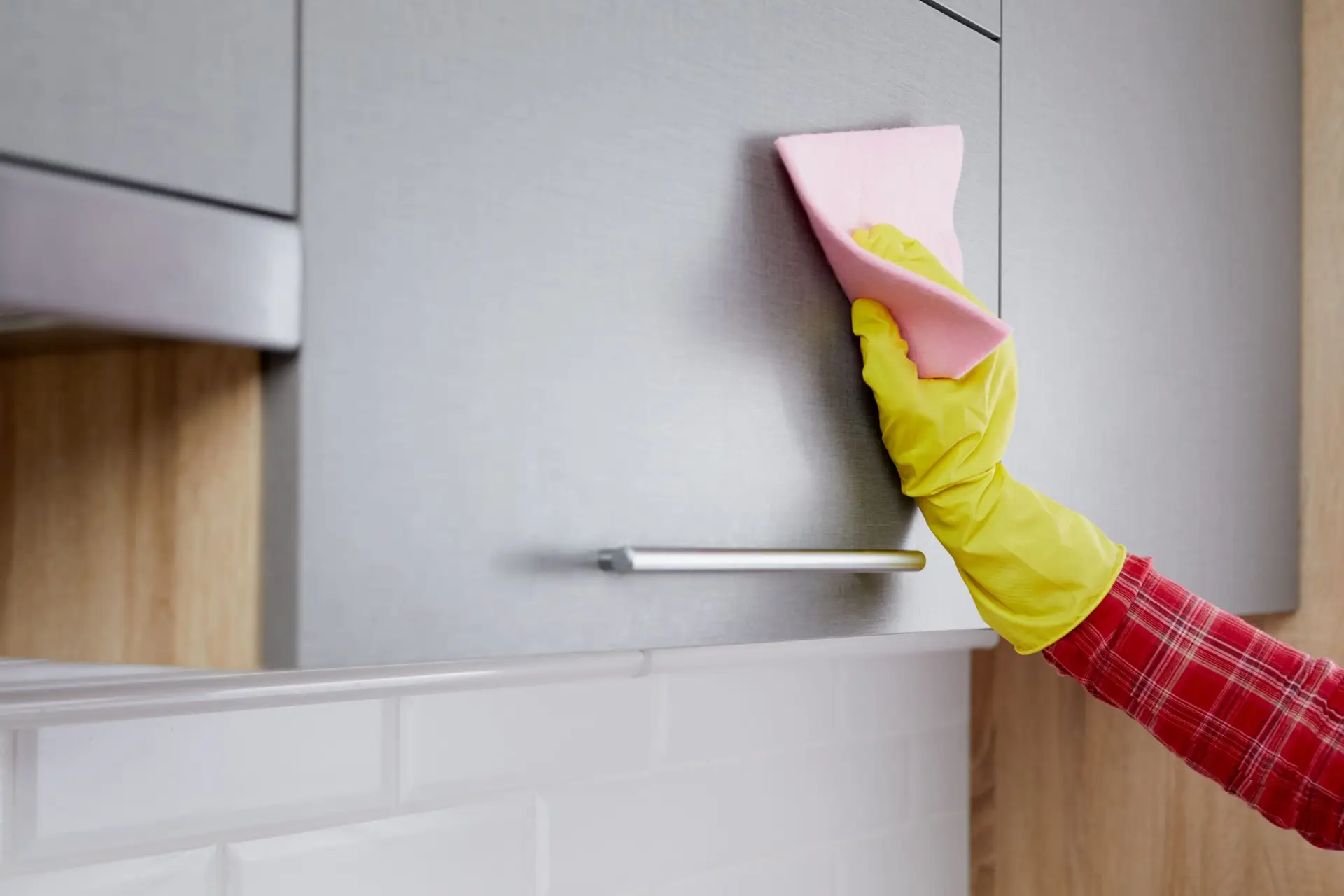
Dip your cloth into the soapy water and wring it out thoroughly until it is only damp. Wipe the cabinet doors starting from the top and working your way down. Don’t forget the “high-touch” areas: the edges of the doors and the areas around the handles.
Step 3 – Spot Clean Grease
For sticky spots that won’t budge, apply a drop of undiluted dish soap to your cloth and rub gently in a circular motion. If the grease is older and hardened, a 50/50 mixture of white vinegar and warm water can help break the bond.
Step 4 – Dry Thoroughly
This is the most critical step. Moisture left on the surface can cause paint to peel or wood to swell. Use a clean, dry towel to buff the cabinets until no streaks or dampness remain.
Best Cleaners for Kitchen Cabinets
- Dish Soap: The safest option for every finish. It breaks down food oils without damaging the wood’s seal.
- Vinegar Solution: Excellent for removing “film” and adding a light shine, but use it diluted (1 part vinegar to 2 parts water).
- Cabinet-Safe Cleaners: Commercial products like Murphy’s Oil Soap are great for stained wood but should be used sparingly on painted surfaces to avoid residue buildup.
How Often Should You Clean Kitchen Cabinets?
- Daily: Wipe down the handles and any visible splatters after cooking.
- Weekly: A quick damp-wipe of the cabinets closest to the stove.
- Seasonally (Every 3-6 Months): A full “deep clean” including the cabinet tops, undersides, and interior shelves.
What NOT to Use on Cabinets
Abrasive Sponges
Never use the green side of a kitchen sponge or steel wool. These create micro-scratches that will make your cabinets look dull and allow grease to “anchor” deeper into the surface.
Harsh Chemicals
Avoid bleach, ammonia, and high-strength glass cleaners. These can strip the paint or cause the wood stain to fade and “cloud.”
FAQ: Cabinet Care Logic
What is the best cleaner for kitchen cabinets?
A simple solution of warm water and clear dish soap is the professional standard for safety and effectiveness.
Can you use vinegar on cabinets?
Yes, but always dilute it. Using straight vinegar can be too acidic for some modern cabinet paints and may eat through the finish over time.
How do you clean sticky cabinets?
The “stickiness” is usually oxidized cooking grease. Use a grease-cutting dish soap or a specialized citrus-based degreaser, allowing it to sit for 60 seconds before wiping.
Need Help With Deep Kitchen Cleaning?
At Harmony Cleaning, we know that a greasy kitchen is one of the toughest rooms in the house to manage. Our professional deep cleaning services target the “forgotten” grease—on top of your cabinets, behind the stove, and along the baseboards—to ensure your kitchen is truly sanitized and shining.
- Expert Degreasing: We use products that are tough on grease but safe for your home’s finishes.
- Detail-Oriented Teams: We clean the handles, the hinges, and the undersides that others miss.
- Professional Standards: We treat your high-end cabinetry with the respect it deserves.
Would you like Harmony Cleaning to include a professional cabinet degreasing in your next deep home cleaning?