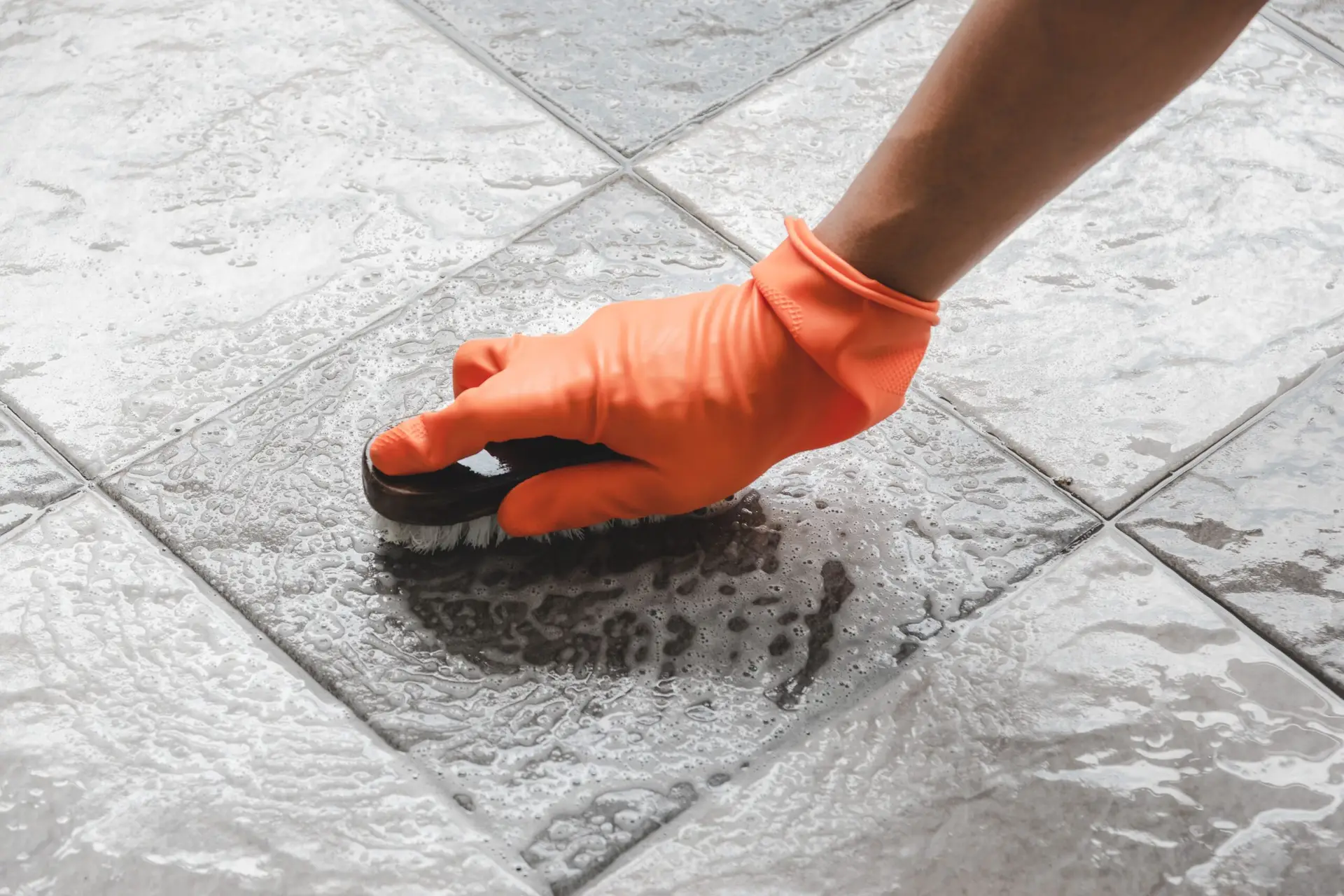
Best Way to Clean Grout Between Floor Tiles
Grout is the unsung hero of your tile floors, but it is also the most challenging part to keep clean. Because grout is naturally porous—essentially acting like a sponge for dirt, oil, and moisture—it can turn dark and dingy long before your tiles do.
At Harmony Cleaning Services, we know that effective grout maintenance is about using the right techniques to lift grime out of the pores rather than just pushing it around. Here is your expert guide to restoring your grout lines to their original, clean look.
Why Grout Gets Dirty So Quickly
It is not just your imagination; grout really does attract dirt like a magnet.
- Porosity: Grout is a cement-based material filled with tiny microscopic pores that readily absorb liquids, oils from feet, and debris.
- Improper Cleaning: Ironically, mopping can be a major culprit. Using too much water or “dirty” mop water pushes contaminants from the surface of the tile directly into the grout lines.
- Aging Sealant: Grout is supposed to be protected by a sealant. Once that protective barrier wears away (usually every 1–3 years), the grout is left completely exposed to stains and moisture.
Best Grout Cleaning Methods
For a fresh clean, choose a method based on the severity of the buildup:
- Baking Soda and Hydrogen Peroxide: For a powerful DIY solution, mix baking soda and hydrogen peroxide into a thick paste. Apply it to the grout lines, let it sit for 15–20 minutes, then gently scrub with a soft-bristle brush.
- Commercial Grout Cleaners: Look for pH-neutral cleaners specifically designed for tile and grout. These are formulated to penetrate the pores without the harsh acidity that damages natural stone or the grout itself.
- Steam Cleaning: If you have access to a steam cleaner, this is often the most effective and eco-friendly method. The high-temperature steam loosens embedded dirt and bacteria, which can then be wiped away without the need for heavy chemicals.
How to Clean Floor Tile Grout Step by Step
- Clear the Area: Sweep or vacuum the floor thoroughly to remove loose dust and grit.
- Apply Cleaner: Apply your chosen cleaning solution (or paste) directly to the grout lines.
- Dwell Time: Let the cleaner “dwell” or sit for 10–15 minutes. This allows the solution to break down the bond between the dirt and the grout.
- Gentle Scrub: Use a soft-bristle brush (a dedicated grout brush or an old, soft toothbrush works well). Avoid hard-bristle or wire brushes, as these can erode the grout over time.
- Rinse and Dry: Wipe away the dirty residue with a clean, damp microfiber cloth. Crucial: Buff the grout dry afterward so water doesn’t soak back into the pores.
How Professionals Clean Grout
Professional cleaners use industrial-grade equipment that the average homeowner doesn’t have. They utilize high-powered, truck-mounted extraction systems that provide a “deep flush” of the grout pores with heated water and specialized solutions, followed immediately by high-vacuum extraction. This removes the dirt that has been trapped for years, leaving the grout completely sanitized and residue-free.
What Not to Use on Grout
Many common household “hacks” are actually dangerous for your floors:
- Vinegar: Because it is highly acidic, vinegar will slowly eat away at the cement in the grout, weakening it and making it more porous over time.
- Bleach: Bleach is corrosive. Repeated use will eventually cause grout to crack, crumble, or yellow permanently.
- Soap-Based Cleaners: These leave behind a sticky, invisible film that acts as a magnet for more dirt.
How to Keep Grout Cleaner for Longer
- Apply a Grout Sealant: Once your grout is clean and fully dry, apply a high-quality penetrating grout sealer. This should be done every 1–2 years.
- Mist, Don’t Soak: When mopping, use a spray bottle to mist the floor and a microfiber mop to wipe it up, rather than a traditional soaking mop.
- Walk-off Mats: Place quality mats at all entrances to catch grit and moisture before it hits your floors.
When Tile and Grout Need Professional Cleaning
DIY methods are great for maintenance, but call a professional if:
- The grout has changed color permanently and DIY methods haven’t budged it.
- You notice mold or mildew that keeps returning.
- You have natural stone tiles (like marble or travertine) that are highly sensitive to household chemicals.
- The sealant has completely worn away and you want to ensure the surface is properly prepped before resealing.
FAQ
What is the best homemade grout cleaner?
A paste made of baking soda and hydrogen peroxide is generally the safest and most effective for lifting stains without damaging the grout.
How do professionals clean grout?
Professionals use high-pressure, hot water extraction machines that flush dirt out of the pores of the grout, combined with professional-grade, pH-neutral cleaners.
Can vinegar damage grout?
Yes. It is too acidic and will erode the cementitious bond of the grout, eventually leading to cracks and a dull appearance.
How often should grout be cleaned?
Perform light maintenance (vacuuming and microfiber wiping) weekly. Perform a deeper clean every 3–6 months, depending on the foot traffic in that area of your home.
Is your grout looking more grey than white? At Harmony Cleaning Services, we use professional equipment and safe, effective techniques to restore your floors to their original glory.
Contact Harmony Cleaning Services today to schedule your professional tile and grout cleaning!