How to Clean Wood Kitchen Cabinets Without Damaging Them?
Your kitchen cabinets are the focal point of your home, but they also endure the most abuse. Between airborne grease from cooking, steam, and daily fingerprints, wood cabinets can quickly lose their luster and become sticky.
At Harmony Cleaning Services, we believe the secret to a long-lasting, beautiful kitchen is proper maintenance. Wood is a living material, and harsh chemicals or improper cleaning methods can strip the finish, cause swelling, or even permanently damage the wood grain. Here is our expert guide on how to clean your cabinets effectively and safely.
Why Wood Kitchen Cabinets Need Gentle Cleaning
Wood cabinetry is typically finished with a protective sealant, lacquer, or varnish. If you use overly abrasive tools or acidic solutions, you risk “etching” that finish. Once the finish is compromised, moisture can penetrate the wood, leading to warping, discoloration, and irreparable peeling. The goal is to lift the dirt, not strip the protection.
Best Cleaners for Wood Kitchen Cabinets
Forget the “magic” chemical cleaners you see on social media. The most effective cleaners are often the simplest:
- Mild Dish Soap and Warm Water: This is the gold standard. A mild, grease-cutting dish soap (like Dawn) mixed with warm water is perfect for cutting through cooking oils without harming the wood.
- Wood-Safe Commercial Cleaners: If you prefer a store-bought product, look specifically for “wood-safe” or “cabinet-specific” cleaners that are pH-neutral and contain no ammonia or bleach.
- When to Avoid Vinegar or Harsh Degreasers: Stop using vinegar. While vinegar is a great household cleaner, its high acidity can dull and eventually eat away the wood finish. Similarly, avoid heavy-duty degreasers (like Oven Cleaner or concentrated ammonia-based products), as they are far too harsh for cabinet finishes.
Step-by-Step Cabinet Cleaning Method
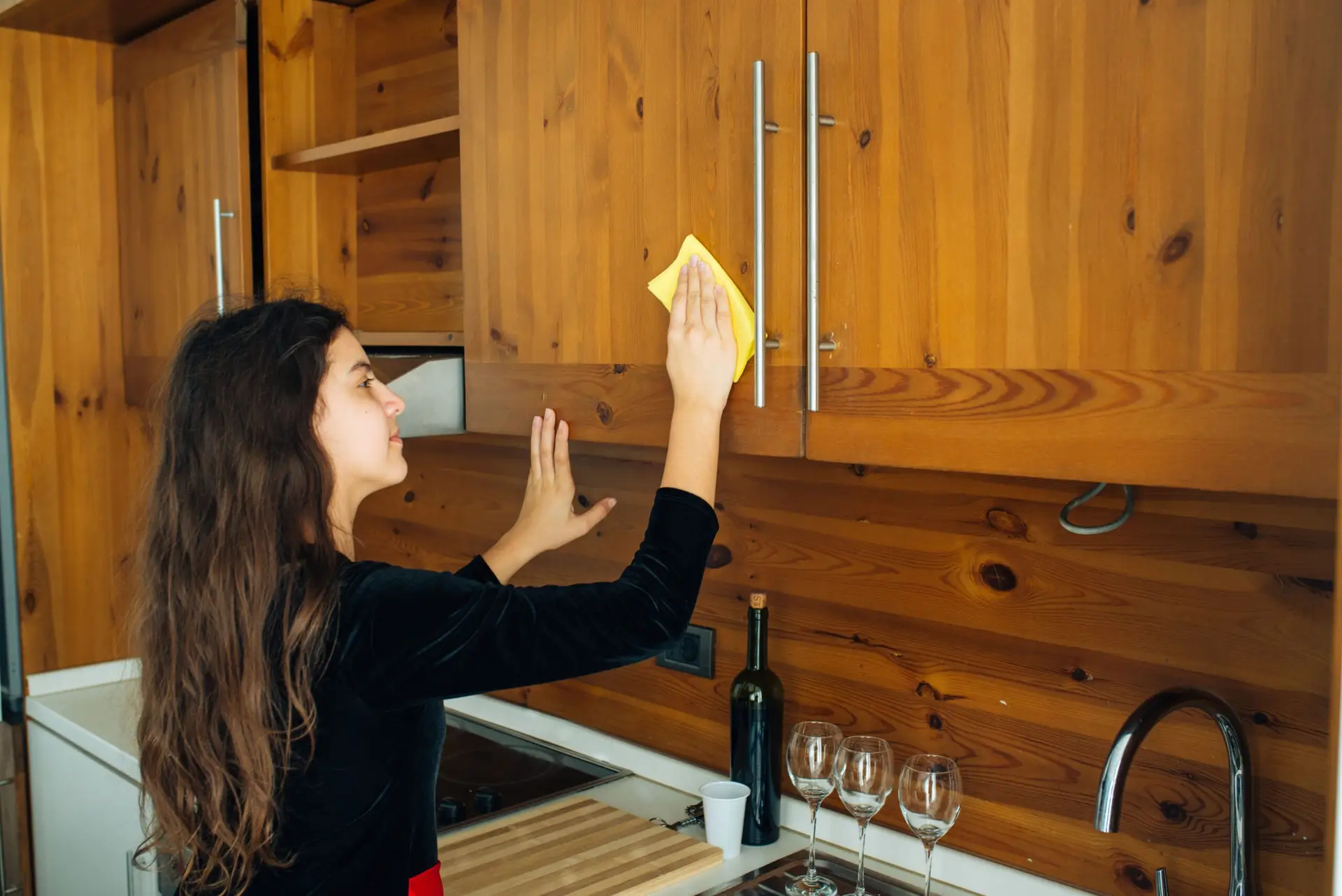
- Dampen, Don’t Soak: Dip a soft microfiber cloth into your soapy water solution and wring it out thoroughly. The cloth should be damp, not dripping. Excess water is the #1 enemy of wood.
- Wipe in the Direction of the Grain: Always wipe following the grain of the wood. This ensures you lift dirt from the crevices rather than pushing it into them.
- Rinse: Use a second, clean cloth lightly dampened with plain water to remove any soapy residue.
- Dry Immediately: This is the most critical step. Immediately buff the cabinets dry with a clean, soft cloth. Never let water sit on the surface.
How to Remove Grease From Cabinet Doors
Grease buildup is particularly stubborn near the stove.
- The Pro Method: Create a paste using a small amount of baking soda and a drop of warm water. Gently rub the paste onto the greasy spot with a soft cloth (do not scrub). Wipe clean with a damp cloth and dry immediately. The baking soda acts as a mild abrasive to break up the oil without damaging the wood.
How Often Should Kitchen Cabinets Be Cleaned?
- Weekly: A quick wipe-down of handles and high-touch areas.
- Monthly: A gentle wipe of all cabinet fronts to keep grease buildup at bay.
- Bi-Annually: A deeper clean, including the inside of doors and the top edges where dust and grease accumulate.
Common Mistakes That Can Damage Wood Cabinets
- Using Abrasive Sponges: Steel wool or the “scrubby” side of a kitchen sponge will scratch the finish.
- Steam Cleaning: Never use a steam cleaner on wood cabinets. The extreme heat and moisture will cause the finish to peel and the wood to swell.
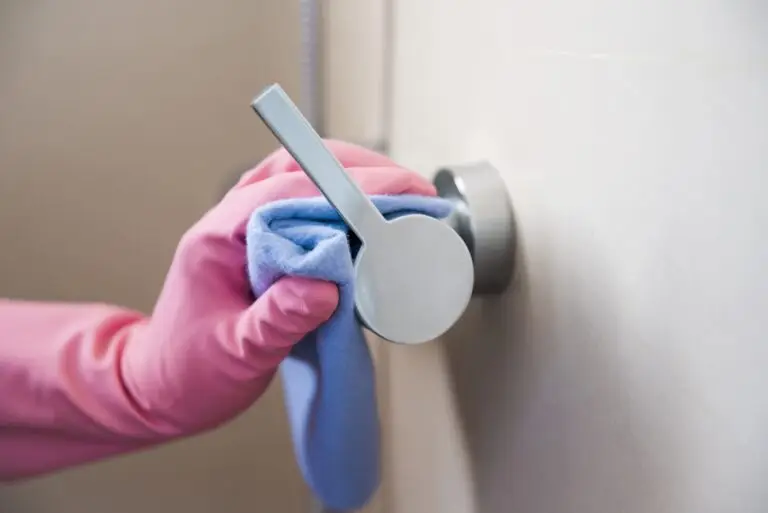
- Ignoring the Hardware: Cleaning agents can sometimes tarnish metal handles. If possible, avoid getting cleaning solution directly on the hardware.
When Professional Kitchen Cleaning Makes Sense
If your cabinets are covered in years of thick, hardened grease, or if you are preparing your home for a sale, professional cleaning is a smart move. At Harmony Cleaning Services, we use specialized, wood-safe techniques that deep-clean without risking your cabinetry’s integrity.
FAQ
What is the best cleaner for wood kitchen cabinets?
A simple mixture of warm water and a small amount of mild, grease-cutting dish soap is the safest and most effective cleaner.
Can vinegar damage wood cabinets?
Yes. Over time, the acidic nature of vinegar will strip the protective finish off your wood, leaving it dull and susceptible to damage.
How do you remove sticky grease from cabinets?
Use a paste made of baking soda and a little water. Apply gently, wipe clean, and dry thoroughly.
How often should kitchen cabinets be deep cleaned?
For most homes, a deep clean twice a year is sufficient to prevent heavy grease buildup, provided you do a light monthly wipe-down.
Is your kitchen in need of a professional touch? At Harmony Cleaning Services, we provide meticulous care for your home’s surfaces. Let us restore the warmth and beauty of your wood cabinets so you can enjoy a spotless kitchen.
Contact Harmony Cleaning Services today to book your kitchen refresh!