Easiest Way to Clean a Microwave
Cleaning a microwave doesn’t have to be a scrubbing marathon. Because microwaves are enclosed, you can harness the power of steam to do most of the hard work for you.
Why Microwaves Get Greasy and Smelly
Microwaves circulate air to heat food, which carries tiny droplets of fat and food particles onto the walls, ceiling, and door. If these aren’t wiped away, they harden into a sticky film. As these residues heat up repeatedly, they begin to smell, leading to that characteristic “stale” microwave odor.
Easiest Microwave Cleaning Hack
Vinegar and water steam method
Combine one cup of water and two tablespoons of white vinegar in a microwave-safe bowl. Heat for 3–5 minutes until the water is boiling and the interior is steamy. Leave the door closed for another 5 minutes to allow the steam to penetrate the grime.
Lemon steam method
Follow the same process as the vinegar method, but replace the vinegar with half a squeezed lemon (throw the rind in too). This is excellent for neutralising odors while cleaning.
Dish soap steam method
Add a few drops of grease-fighting dish soap to a bowl of water and heat until steaming. This is specifically effective for loosening heavy oil splatters.
Step-by-Step: How to Clean a Microwave Fast
1. Steam the interior
Place your chosen cleaning solution bowl in the center and run it on high until the steam is visible on the glass door.
2. Wipe loosened grime
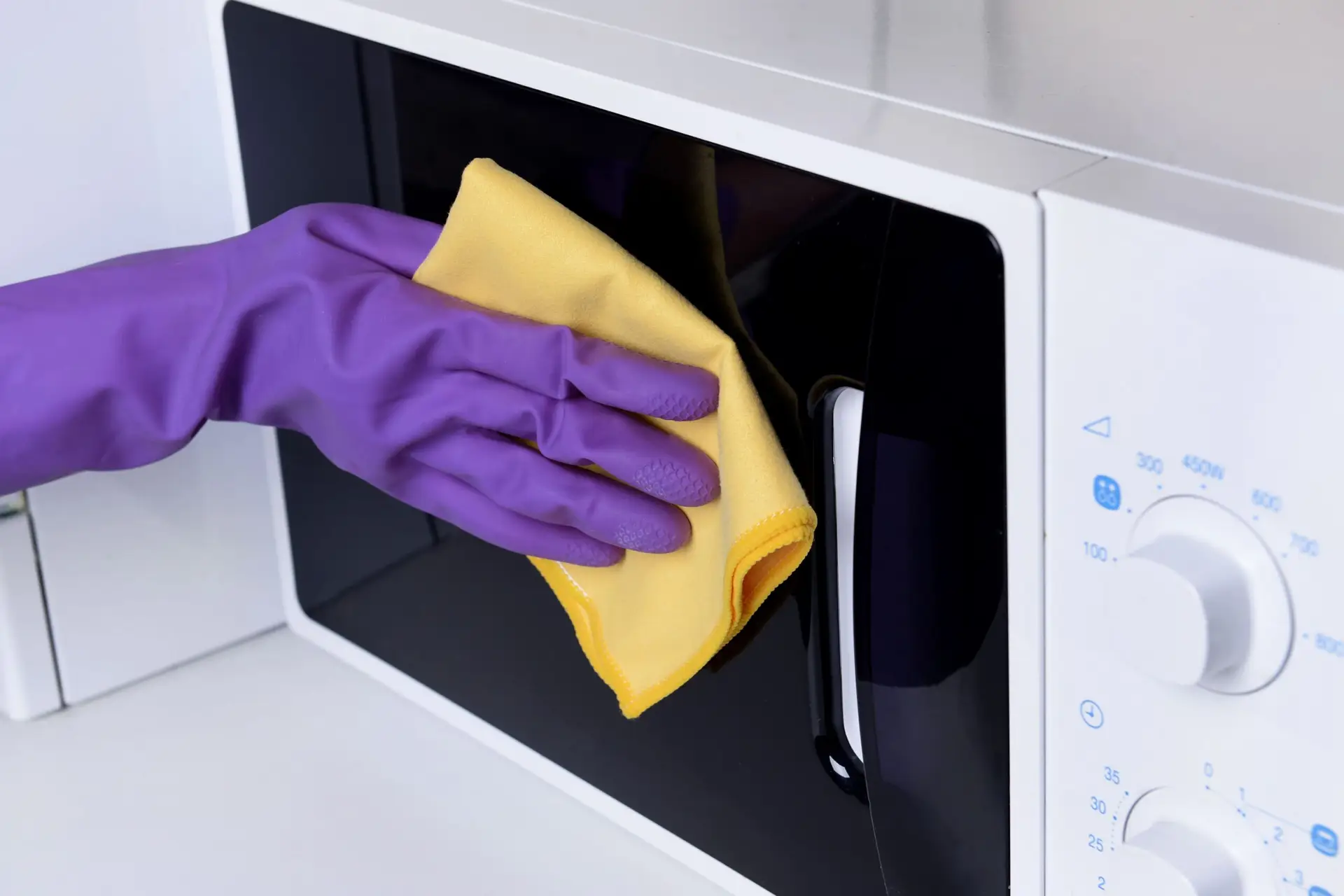
Carefully remove the bowl (it will be hot!). Using a microfiber cloth or soft sponge, wipe down the ceiling, sides, and back. The grime should wipe off effortlessly.
3. Clean the turntable
Remove the glass plate and turntable ring. Wash them in your sink with warm, soapy water just like you would a dinner plate.
4. Remove odors
If odors persist after cleaning, leave a small open bowl of baking soda inside the microwave overnight to absorb lingering scents.
How to Clean Stubborn Microwave Splatter
For thick, dried-on sauces, apply a concentrated paste of baking soda and water directly to the spot after the steam cycle. Let it sit for a few minutes before wiping, then finish with a quick wipe of white vinegar to remove any baking soda residue.
What Not to Use Inside a Microwave
- Bleach: Never use bleach inside a microwave; it can corrode the internal components and leave toxic fumes.
- Steel Wool/Abrasive Scourers: These can scratch the interior finish, which may interfere with the microwave’s performance or cause rust over time.
- Harsh Chemical Oven Cleaners: These are not designed for the interior of microwaves and can damage the microwave-safe plastic or metal lining.
How Often Should You Clean a Microwave?
- Weekly: A quick wipe-down and steam cycle prevents the buildup of hardened grease.
- Monthly: A full deep clean, including the turntable and the exterior door frame.
Professional Kitchen Cleaning for Built-Up Grease
If you have a microwave that has been neglected for years or has heavy grease buildup inside the vents or door mechanism, professional cleaning is often more effective. Professionals use specialized tools to clean components without introducing excess moisture to the sensitive internal electronics.
FAQ
What is the easiest way to clean a microwave?
The steam method. Heating a bowl of water with lemon or vinegar for 5 minutes does 90% of the work for you.
How do you clean a microwave with vinegar?
Place a bowl of water and vinegar inside, heat until steamy, let it sit, and wipe everything clean.
How long should I microwave vinegar and water?
3 to 5 minutes, depending on the power of your unit. You want to see significant steam accumulating on the walls.
How do you remove microwave smells?
Steam with lemon or leave a bowl of baking soda inside the unit overnight.
Can you use bleach in a microwave?
No. Bleach is corrosive and dangerous to use in a microwave environment.