Best Cleaner for Kitchen Counters by Surface Type
Your kitchen counters are the centerpiece of your home, but they are also home to various materials—each with its own specific chemical needs. Using an “all-purpose” cleaner on the wrong surface can lead to etching, dulling, or permanent staining. This guide helps you choose the right product for your specific kitchen surface.
Why the Best Counter Cleaner Depends on the Material
Countertops range from porous natural stones like marble to non-porous synthetic surfaces like quartz. A cleaner that is perfectly safe for laminate might contain acids that eat away at a limestone or marble surface. Understanding the chemical composition of your counter is the first step in preserving its shine and integrity.
Best Cleaner for Quartz Countertops
Quartz is an engineered stone that is relatively durable but sensitive to high-pH or highly acidic chemicals.
- Mild dish soap and warm water: The safest, most effective daily solution.
- pH-balanced stone cleaners: Use these for a streak-free, deeper clean without the risk of damaging the resin binders.
- What not to use on quartz: Never use abrasive scrubbers, harsh degreasers, or acidic cleaners (like vinegar or lemon juice).
Best Cleaner for Granite Countertops
Granite is naturally porous and requires a sealer to remain stain-resistant. Use pH-neutral cleaners specifically formulated for stone. Avoid anything acidic, which can etch the finish over time.
Best Cleaner for Laminate Counters
Laminate is tough and non-porous. You can use mild soap and water or even a gentle, non-abrasive household cleaner. Avoid scouring pads or steel wool, which will permanently scratch the surface.
Best Cleaner for Butcher Block Counters
Butcher block requires food-safe maintenance. Avoid chemical cleaners entirely. Use a mild soap and water solution, followed by regular applications of food-grade mineral oil to keep the wood from drying out and cracking.
Best Cleaner for Marble and Natural Stone
Marble is highly sensitive to acids (lemon, vinegar, wine). Use a specialized, pH-neutral stone cleaner. If a spill happens, blot immediately—do not wipe, as that spreads the acid across the surface.
How to Disinfect Kitchen Counters Safely
Disinfection is different from cleaning. For most surfaces, a mixture of 70% isopropyl alcohol and 30% water is effective. For natural stone, consult your manufacturer’s guidelines, as even alcohol can occasionally dull a finish over time. Always test in an inconspicuous area first.
Daily Kitchen Counter Cleaning Routine
- Clear the clutter.
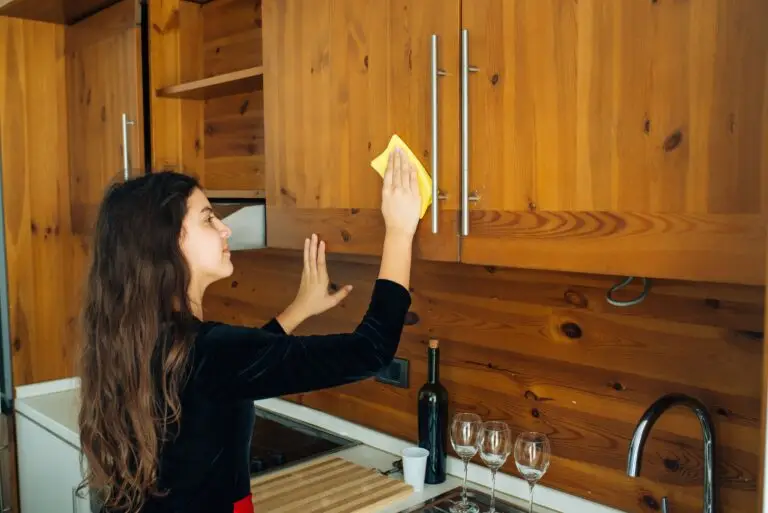
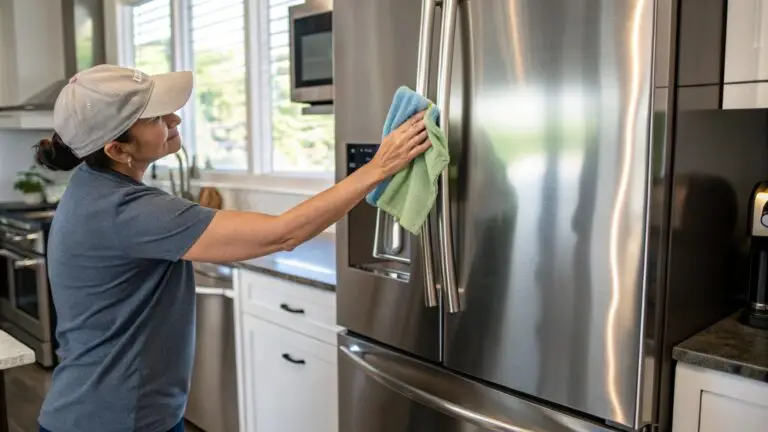
- Wipe crumbs and debris with a soft microfiber cloth.
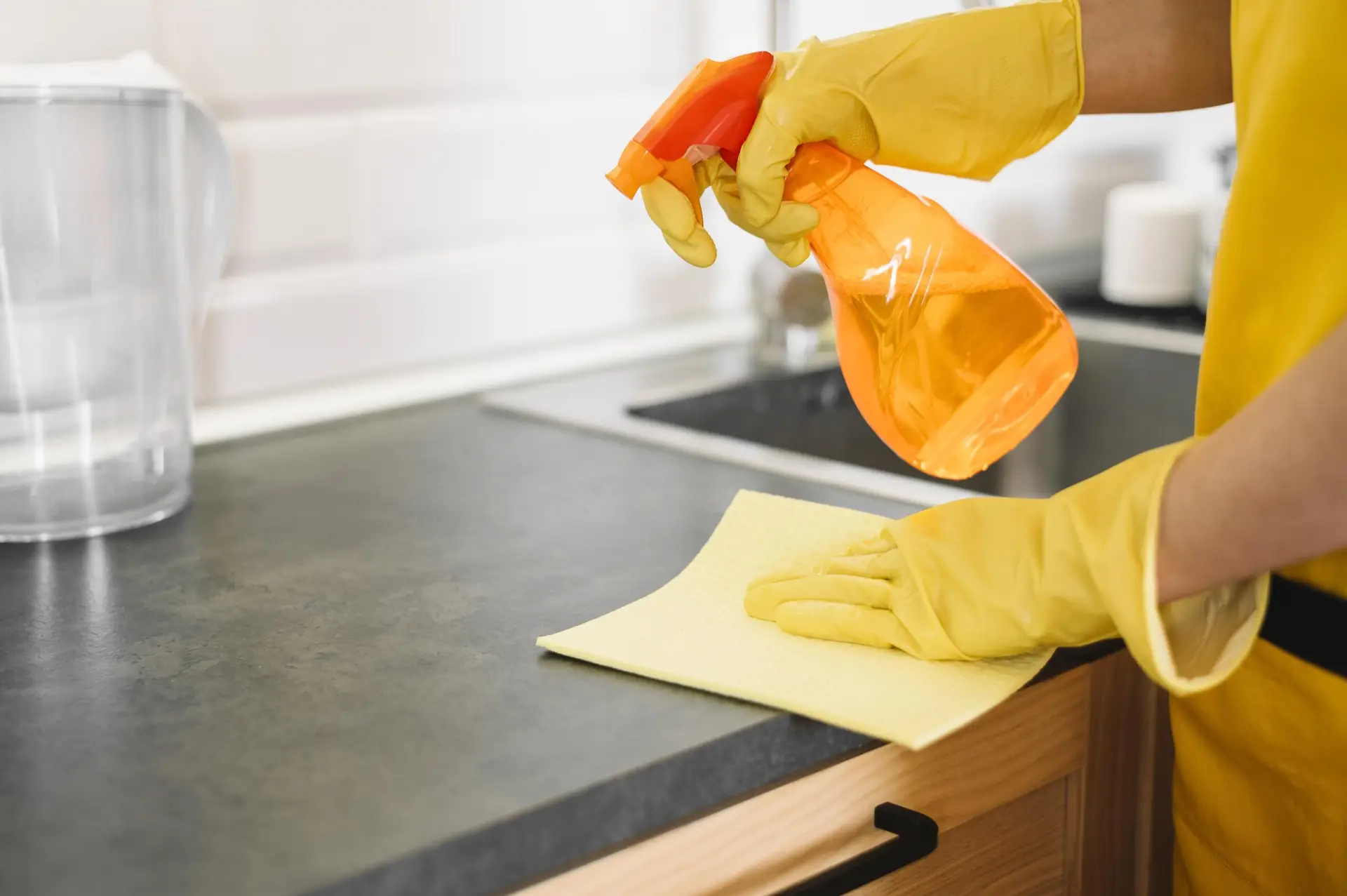
- Use a neutral cleaner (or soap/water).
- Dry immediately: Water left to sit can lead to mineral buildup or spotting, especially on dark surfaces.
Common Countertop Cleaning Mistakes
- Using Vinegar: The acidity is a “stone killer.”
- Using Bleach: It can cause yellowing and degrade sealers.
- Abrasive Scrubbing: Permanent micro-scratches trap bacteria over time.
- Neglecting the Gaps: Allowing moisture to seep into seams can cause warping or mold.
When Professional Kitchen Cleaning Makes Sense
Kitchens are high-traffic zones. While daily maintenance is your job, Harmony Cleaning can perform deep stone restoration, grout cleaning, and heavy-duty degreasing that removes the “invisible” grime buildup that household cloths often miss.
FAQ
What is the best cleaner for kitchen counters?
The “best” is a pH-neutral cleaner specific to your material. When in doubt, warm water and a tiny drop of mild dish soap is the universal safe choice.
Can I use vinegar on kitchen counters?
No. Vinegar is acidic and will damage marble, granite, and limestone by etching the surface.
What cleaner is safe for quartz?
Stick to mild dish soap or cleaners explicitly labeled as “pH-neutral.”
How do you disinfect counters without damaging them?
Isopropyl alcohol (70%) is generally safe for non-porous surfaces. For natural stone, stick to stone-safe disinfectant sprays recommended by the stone manufacturer.
Should kitchen counters be cleaned daily?
Yes. Daily cleaning prevents the buildup of bacteria and ensures that acidic spills don’t have time to damage sensitive stone surfaces.
Keep Your Kitchen Immaculate
At Harmony Cleaning, we understand the science behind every surface. Let us handle the deep cleaning so your kitchen remains a safe and beautiful space for your family.
Book your kitchen deep-cleaning session with Harmony Cleaning today!