How to Clean Bathroom Storage Cabinets and Drawers?
Quick Answer: Empty, Wipe, Sort, and Restock
The most effective way to clean bathroom cabinets and drawers is to completely empty the space, throw away expired products, wipe down sticky shelves with a mild soapy solution, and thoughtfully sort items before restocking. Regular cabinet maintenance prevents hidden clutter, eliminates sticky product residue, and keeps your daily grooming essentials easy to find.
Why Bathroom Storage Gets Dirty Quickly
Product Spills
Humidity
Hair, Dust, and Packaging Debris
Bathroom cabinets and vanity drawers endure heavy daily wear. Leaking shampoo bottles, liquid soaps, and makeup tubes leave sticky rings along the baseboards. Furthermore, fluctuating bathroom humidity combines with stray hair, dust, and cardboard packaging debris, creating a layer of grime that accumulates quickly out of sight.
Step-by-Step Bathroom Cabinet Cleaning
Remove Everything
Throw Away Expired Items
Wipe Shelves and Drawer Interiors
Clean Containers Before Restocking
- Empty the Entire Space: Take every bottle, tool, and basket out of your cabinets and drawers so you are working with a blank slate.
- Purge Expired Items: Check expiration dates on sunscreens, lotions, medications, and cosmetics. Toss anything old, separated, or unused.
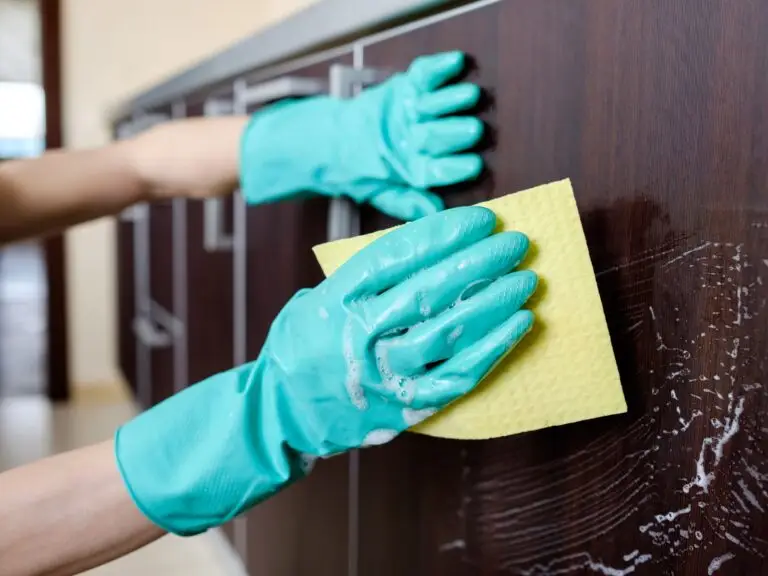
- Wipe Down Surfaces: Vacuum out loose dust and hair from drawer corners, then wipe down the interior walls and shelves with a microfiber cloth dampened in warm water and mild dish soap. Dry completely before putting anything back.
- Wipe Containers: Clean the sticky bottoms of bottles and jars before returning them to your freshly wiped shelves.
How to Organize Bathroom Supplies
Daily Use Items
Backup Products
Cleaning Supplies
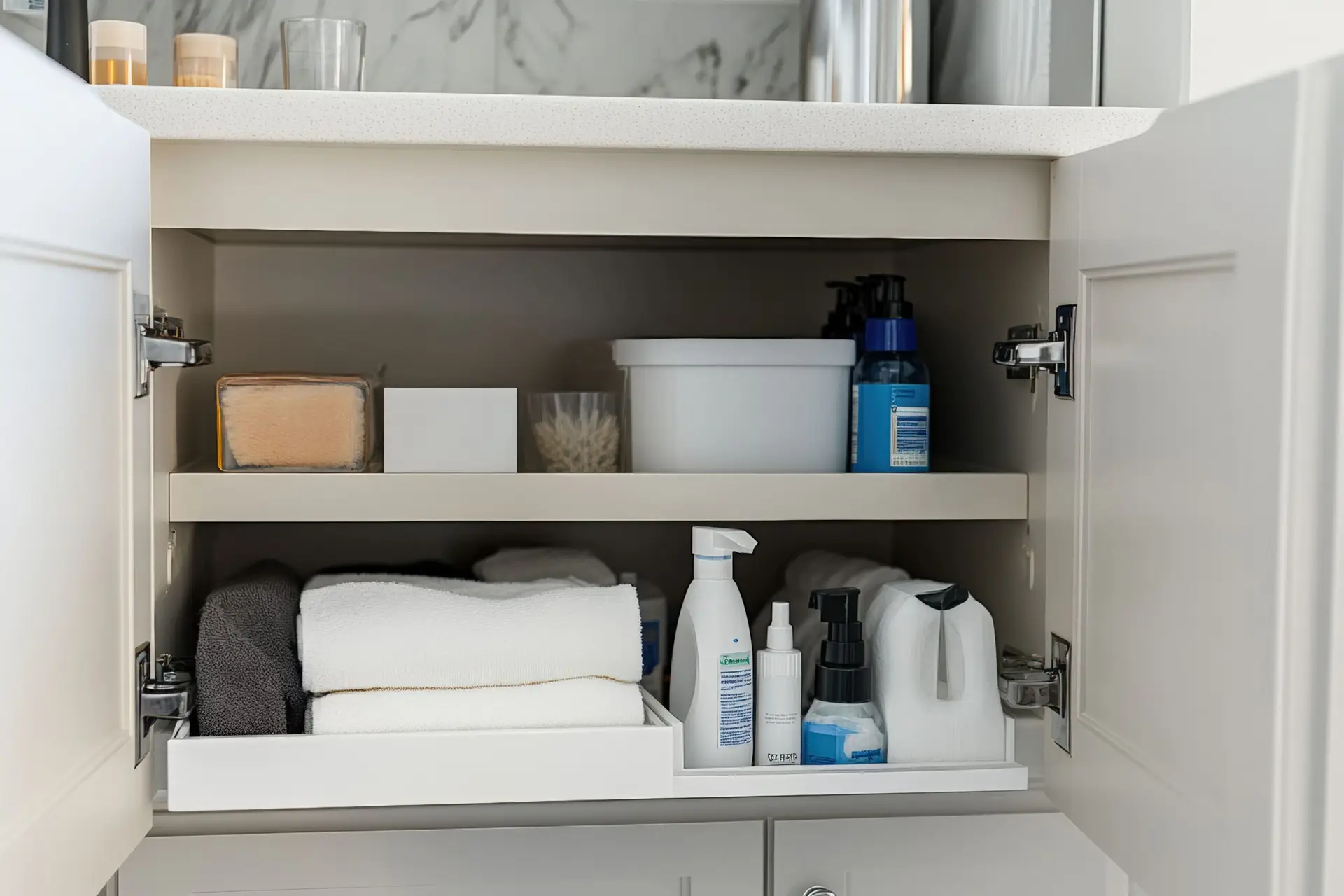
Storage note: include moisture-safe organizers and easy-to-clean liners.
To keep your cabinets clean longer, establish a logical storage system:
- Prime Real Estate: Keep daily-use items (toothbrushes, face wash, everyday makeup) in top drawers or easily accessible cabinet shelves.
- Storage Liners: Protect your wood shelving by placing easy-to-clean plastic or silicone shelf liners down first, making future spills effortless to wipe up.
- Moisture-Safe Bins: Use clear, washable plastic bins or acrylic organizers to group backup soaps, hair products, and extra toilet paper, keeping humid air from trapping moisture against cabinet floors.
How Often Should You Clean Bathroom Cabinets?
You should give your bathroom cabinets and drawers a quick surface wipe and clutter check every 3 to 4 months. A full, deep clean and product purge is ideal twice a year.
Partnering with Professional Cleaning Services
Service angle: connect to home organizing and deep cleaning.
Internal linking note: use organizing, bathroom cleaning, and weekly checklist anchors.
Keeping a bathroom truly spotless extends beyond scrubbing fixtures and wiping counters. When bathroom clutter builds up or cabinet organization feels overwhelming, expert help can transform your space—explore our specialized Home Organizing Services to streamline your storage areas. To maintain an immaculate room year-round, combine your cabinet care with the routine habits outlined in The Ultimate Weekly House Cleaning Checklist and pair it with deep surface maintenance like our tips on How to Clean Bathroom Tile and Grout.
FAQ
How do you clean inside bathroom cabinets?
Start by removing all items, vacuuming out loose debris, wiping down shelves with a damp microfiber cloth and mild soap, drying the surface thoroughly, and placing down protective shelf liners before restocking.
How do you organize bathroom drawers?
Group items by category (hair care, dental hygiene, cosmetics) and use shallow drawer dividers or small acrylic bins to keep smaller items from rolling around and creating clutter.
Can professional cleaners organize bathroom cabinets?
Yes! Many professional housekeeping and home organization teams offer dedicated cabinet sorting, purging expired products, and systematic restocking as part of an upgraded deep-cleaning service.