What Is the Best Kitchen Floor Cleaner?
The kitchen is the heart of the home, but it’s also the area that endures the most daily abuse—grease splatters, dropped liquids, and constant foot traffic. Choosing the right cleaner isn’t just about making the floor look good; it’s about protecting your investment and ensuring your kitchen remains hygienic. At Harmony Cleaning, we see the damage caused by “one-size-fits-all” cleaners every day. Here is our expert guide to finding the right match for your kitchen.
Why Kitchen Floors Need the Right Cleaner
Kitchen floors are unique because they face a combination of organic matter (food, oils) and specialized flooring materials. Using an abrasive cleaner on delicate stone or a water-heavy cleaner on certain wood floors can cause irreversible damage. The right cleaner balances effective grease-cutting power with the pH requirements of your specific floor type.
Best Cleaner by Kitchen Floor Type
Tile kitchen floors
Ceramic and porcelain are durable, but their grout lines are porous. Use a neutral pH cleaner to avoid dulling the glaze. For the tile surface itself, a gentle soap-based cleaner works wonders.
Vinyl and luxury vinyl plank
Vinyl is highly moisture-resistant, but harsh chemicals can strip its protective coating. Use a specialized vinyl floor cleaner or a simple mixture of warm water and a drop of dish soap. Avoid steam mops, as they can cause seams to lift.
Hardwood kitchen floors
Hardwood needs a dedicated wood-floor cleaner. Never saturate hardwood. Use a spray-and-mop method with products specifically formulated for wood to maintain the finish without creating a waxy buildup.
Laminate kitchen floors
Like hardwood, laminate is sensitive to moisture. Only use cleaners specifically labeled for “laminate.” Never use wax, polish, or steam mops, which can cause peeling or swelling.
Natural stone floors
Stone (marble, slate, travertine) is highly porous and sensitive to acid. Use only cleaners specifically labeled as “stone safe.” Avoid vinegar, ammonia, and anything acidic, which will etch the surface.
Best Cleaner for Grease and Food Spills
For localized grease spots, a degreaser is your best friend. A simple solution of warm water mixed with a few drops of grease-fighting dish soap (like Dawn) is often more effective than harsh chemicals for lifting surface oils without leaving a residue.
Best Homemade Kitchen Floor Cleaner
For a versatile, safe cleaner that works on most surfaces:
- Mix: 1 gallon of warm water, 1/4 cup of white vinegar (use only on sealed surfaces—not stone!), and a drop of Castile soap.
- Pro Tip: If you have stone floors, skip the vinegar and use a drop of neutral dish soap instead.
Cleaning Products to Avoid on Kitchen Floors
- Harsh Acidic Cleaners: Vinegar or lemon juice can etch stone and damage grout.
- Steam Mops on Wood/Laminate: Excessive moisture often penetrates the core of these floors, leading to warping.
- Bleach: It is generally too aggressive and can discolor your floor finish over time.
How Often Should You Clean Kitchen Floors?
- Daily: Spot clean spills immediately and sweep or vacuum to remove crumbs and grit.
- Weekly: Mop the entire floor to remove accumulated oils and residue.
- Deep Clean: Every 3 to 6 months, move the appliances and perform a deep clean to address the buildup that accumulates in corners and high-traffic paths.
Daily, Weekly, and Deep Cleaning Routine
- Daily: Quick sweep/vacuum and spot-clean spills.
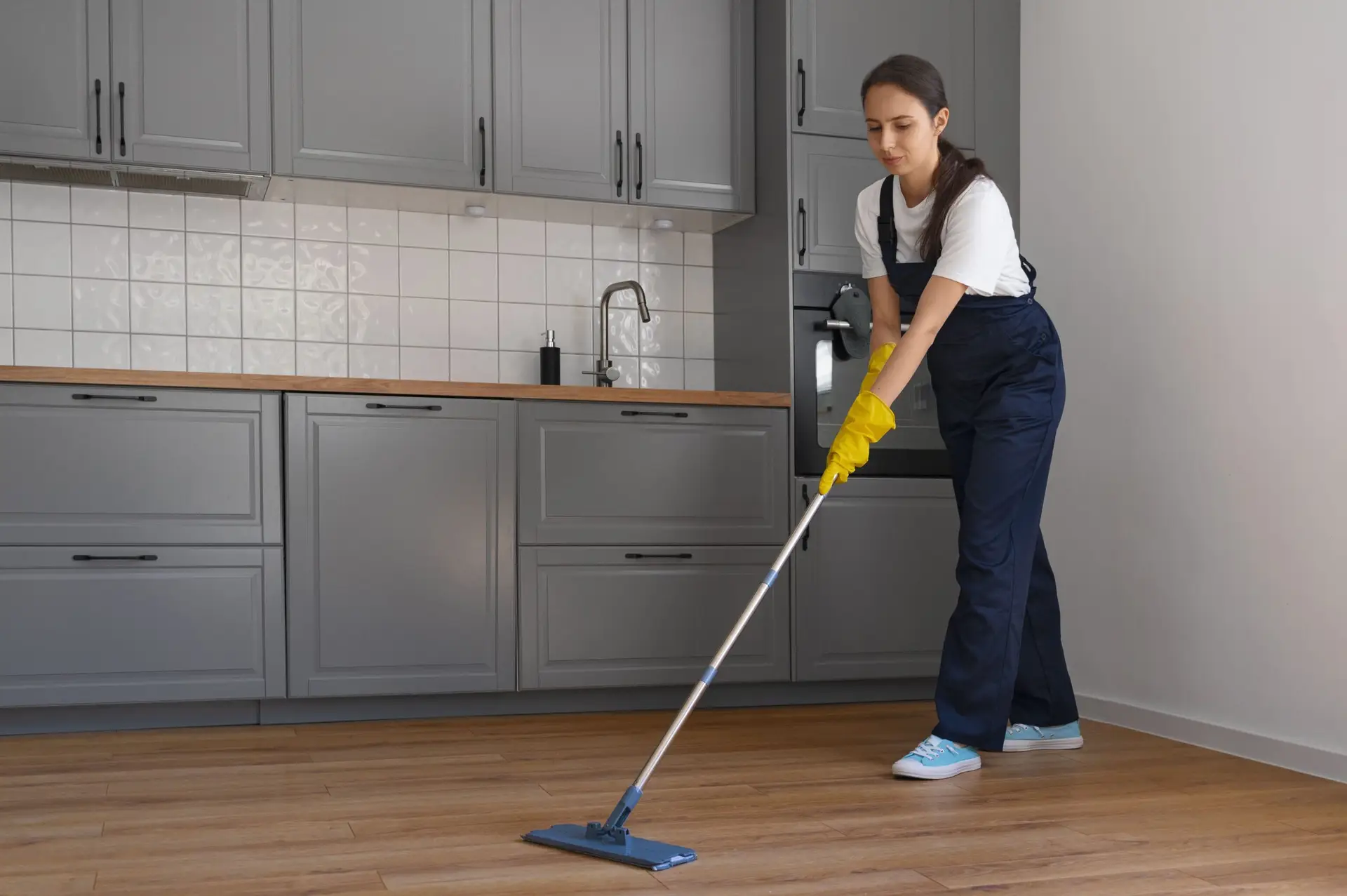
- Weekly: Use a damp (not soaking) mop with a pH-neutral cleaner. Work in sections and allow to air dry.
- Deep Clean: Use a soft-bristled scrub brush to reach along baseboards and into grout lines where grease and dust often settle.
When Professional Kitchen Cleaning Helps
Sometimes, the buildup of sticky kitchen oils and fine dust is so significant that standard mopping just moves the dirt around. Harmony Cleaning utilizes professional-grade floor scrubbers and specialized extraction tools that remove deeply embedded grease from the texture of your tiles or the grain of your wood, restoring the floor’s original luster.
FAQ
What is the best cleaner for kitchen floors?
The best cleaner depends on your floor material. For most sealed floors, a pH-neutral cleaner is the gold standard.
Can I use vinegar on kitchen floors?
Only if you have ceramic, porcelain, or sealed vinyl floors. Avoid it entirely if you have natural stone (marble, slate) or hardwood.
How do you clean greasy kitchen floors?
Start with a warm water and dish soap solution. For stubborn areas, use a dedicated kitchen degreaser, ensuring you rinse thoroughly to prevent a slippery film.
What cleaner is safe for vinyl flooring?
Use a neutral floor cleaner or a mild soap-and-water solution. Always avoid solvent-based cleaners that can damage the vinyl layer.
Should kitchen floors be mopped every day?
No. Daily sweeping is enough. Over-mopping can leave excessive moisture on your floors, which can eventually lead to damage, especially with wood and laminate.
Kitchen looking a little dull?
Between your busy schedule and the constant demands of the kitchen, it’s hard to keep up. Let Harmony Cleaning handle the heavy lifting. We restore your floors to their former glory, so you can focus on cooking and enjoying your home.
Book Your Harmony Kitchen Refresh Today!