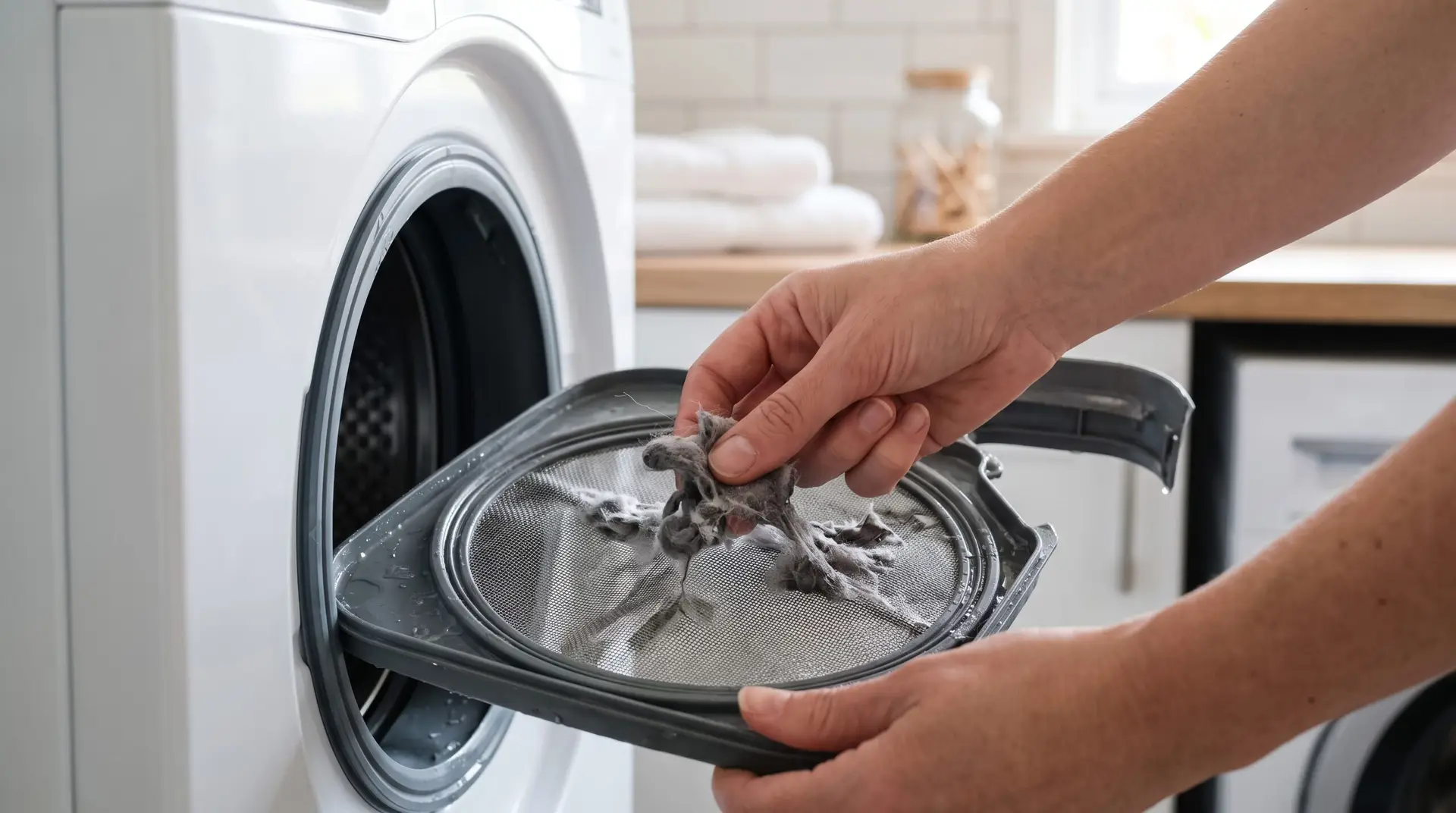
How to Clean a Dryer Lint Trap and Laundry Area Safely?
Quick Answer: Remove Lint, Dust Nearby Surfaces, and Keep Airflow Clear
The most effective way to clean your dryer lint trap and laundry area is to remove trapped lint after every single load, periodically wash the mesh screen with warm soapy water to remove waxy residue, and thoroughly wipe down surrounding dust. Keeping airflow unrestricted ensures your dryer runs efficiently while preventing serious fire hazards.
Why Laundry Areas Collect Dust and Lint
Dryer Lint
Detergent Residue
Dust Behind Appliances
Every time you run your dryer, microscopic clothing fibers break loose and escape into the exhaust stream. While most are captured by the lint trap, fine dust settles across laundry room surfaces, shelves, and behind the unit. Additionally, powdered detergents and aerosol fabric sprays leave a sticky film that attracts drifting dust bunnies.
How to Clean the Lint Trap
Remove Loose Lint After Each Load
Wash the Screen When Residue Builds Up
Dry Completely Before Replacing
- Clear Lint Every Time: Always peel away and discard the blanket of lint from the screen before starting a new load.
- Wash Away Waxy Buildup: Over time, fatty residues from liquid softeners and dryer sheets coat the mesh screen, blocking airflow even if it looks clean. Once a month, scrub the screen with warm water, dish soap, and a soft brush.
- Dry Completely: Ensure the lint screen is 100% dry before sliding it back into the dryer housing to prevent moisture from reaching internal components.
How to Clean Around the Dryer
Floors and Baseboards
Shelves and Cabinets
High-Touch Handles
The laundry room collects dust surprisingly fast. Pair your lint trap maintenance with a quick sweep of the floors, a wipe-down of nearby folding tables, and dusting high-touch areas like washer and dryer lids—for helpful techniques on eliminating fine particles, consult our guide on the Best Way to Remove Dust From Your Home.
What to Leave to a Dryer Vent Professional
While cleaning the lint trap and surface dust is essential DIY maintenance, deep-set clogs inside flexible transition ducts or exterior roof vents require professional intervention. Safety Note: This guide covers routine surface lint removal and laundry area cleaning; it is not a substitute for professional dryer exhaust duct cleaning or full ventilation system maintenance.
When Professional House Cleaning Helps
Service angle: connect laundry room dust control to recurring cleaning.
Internal linking note: use dusting and weekly cleaning anchors.
Maintaining a truly immaculate home extends beyond the living spaces into your utility and laundry areas. Incorporating appliance surface care and dust control into a structured routine guarantees your entire house stays fresh and allergen-free. For a complete room-by-room blueprint, explore our recommendations in The Ultimate Weekly House Cleaning Checklist. Professional recurring cleaning services expertly manage room dust, baseboards, and hard-to-reach floors, giving you a completely refreshed home without the hassle.
FAQ
How often should you clean a dryer lint trap?
You should remove and clean the loose lint from your dryer’s trap before every single load. Washing the screen with soapy water to remove invisible chemical residue should be done monthly.
Can dryer sheets leave residue on lint screens?
Yes. The chemical softeners in dryer sheets leave a thin, waxy coating on the mesh screen over time. This restricts airflow, makes the dryer run longer, and can trigger safety sensors.
Should house cleaners clean behind appliances?
Standard recurring housekeeping services typically clean accessible exterior surfaces, floors, and baseboards around appliances rather than pulling heavy units forward, due to the risk of damaging gas lines, water hoses, or electrical connections.