Can You Use Oven Cleaner on a Stove Top?
The short answer is: Generally, no. While oven cleaner is incredibly effective at cutting through the carbonized, baked-on grease inside an oven, it is formulated with harsh, highly caustic chemicals that can cause irreversible damage to the sensitive finishes on most modern stove tops.
Why Oven Cleaner Is Not Always Safe for Stove Tops
Oven cleaners often contain strong alkalis, such as sodium hydroxide (lye), designed to break down heavy, baked-on grime. Stove tops, however, are made of different materials that are not as chemically resilient as the interior of an oven. Using these harsh agents can lead to discoloration, pitting, or complete destruction of the protective finish on your appliance.
Stove Top Materials and Cleaner Safety
Glass stove tops
Glass cooktops are highly susceptible to chemical etching. Oven cleaner can react with the glass surface, leaving permanent cloudiness or cloudy spots that cannot be polished away.
Gas stove tops
The cast iron grates are usually safe, but the stainless steel or enameled burner boxes beneath them are not. Oven cleaner can strip the finish or cause immediate staining on these surfaces.
Stainless steel stove tops
Harsh chemicals can leave dark, streaky stains on stainless steel that are notoriously difficult to remove and may permanently alter the shine of the metal.
Enamel surfaces
Enamel is essentially a glass coating over metal. Caustic oven cleaners can dull the enamel’s luster or even cause it to crack over time, exposing the underlying metal to rust.
When Oven Cleaner Can Damage a Stove Top
Damage usually happens when the chemical is left on the surface for more than a few minutes or if it is used on a warm surface, which accelerates the chemical reaction. Even a single application can result in a “chemical burn” on the finish, ruining the aesthetic and potentially the functionality of the cooktop.
Safer Alternatives for Cleaning Stove Tops
- Baking Soda and Water: Create a thick paste, apply to the stain, let it sit for 20 minutes, and gently wipe. It is a mild abrasive that lifts grease without scratching.
- White Vinegar: Excellent for cutting through light grease and cutting soap residue. Spray it on, let it sit, and wipe away.
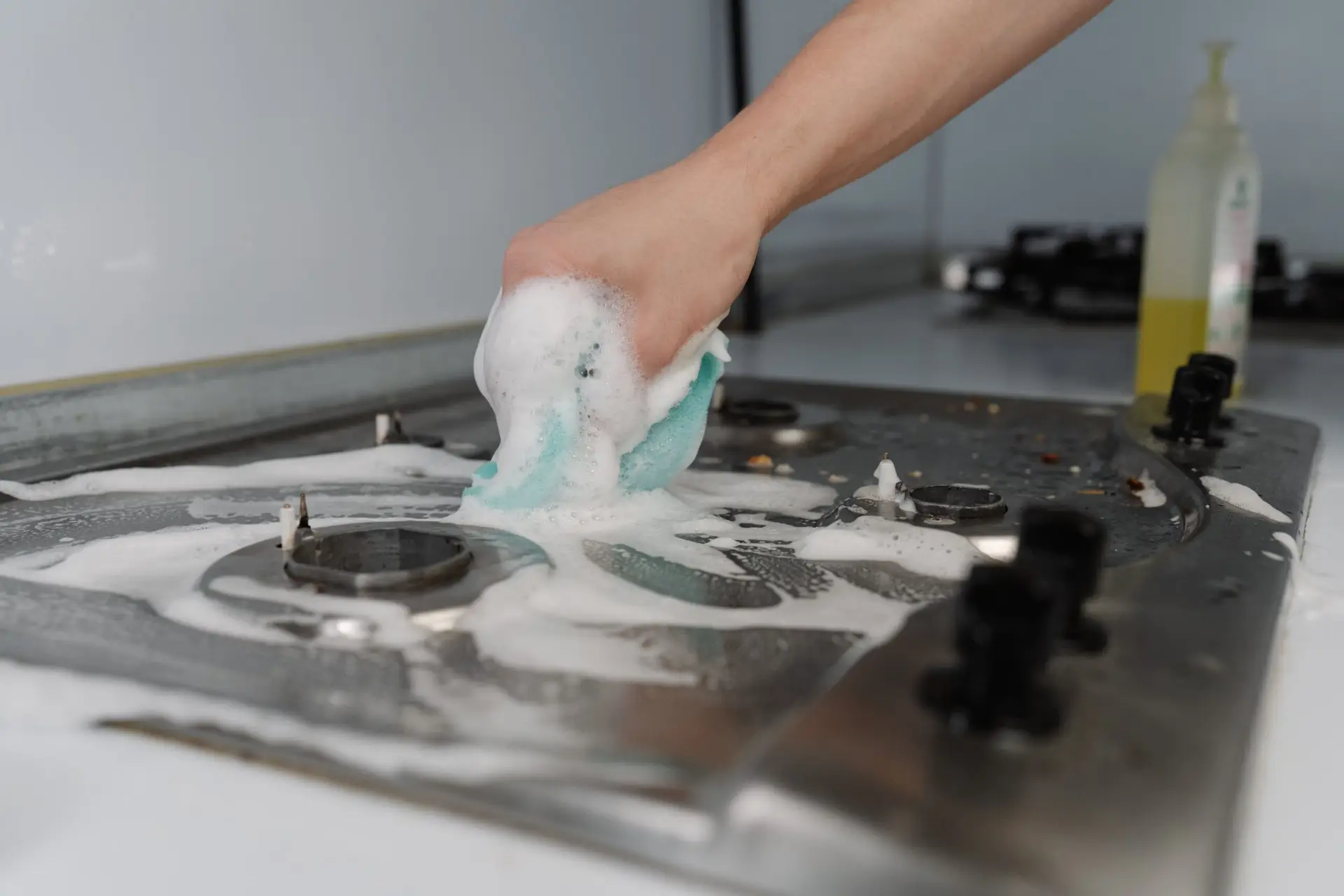
- Dish Soap: Most grease is simply oil. A high-quality grease-cutting dish soap mixed with warm water is usually sufficient for daily maintenance.
How to Clean Grease Without Harsh Chemicals
For stubborn, burnt-on spots, the key is soaking, not chemicals. Lay a towel soaked in hot, soapy water over the mess and let it sit for 15 minutes. The moisture will soften the carbonized food, allowing you to lift it off with a non-scratch plastic scraper or a soft microfiber cloth.
What to Do If You Already Used Oven Cleaner
If you have already applied the cleaner, rinse the surface immediately with large amounts of water and a mild dish soap to neutralize the remaining chemicals. Do not scrub hard if the surface looks damaged. Inspect the area for etching—if the shine is gone, the finish has likely been compromised.
How Professional Kitchen Cleaning Handles Stove Tops
At Harmony Cleaning, we use specialized, pH-balanced cleaners designed specifically for kitchen appliances. We utilize mechanical agitation (like soft-bristle brushes or non-scratch pads) rather than caustic chemicals to ensure your stove top stays clean and shiny without the risk of long-term damage.
FAQ
Can oven cleaner damage a stove top?
Yes. It is highly caustic and can cause permanent discoloration, etching, and pitting on most stove top surfaces.
Can you use oven cleaner on a glass cooktop?
No. You should never use oven cleaner on a glass cooktop, as it will likely damage the glass finish.
What is the safest cleaner for a stove top?
A combination of warm soapy water, baking soda, and white vinegar is the safest and most effective method for long-term care.
How do you remove burnt-on grease?
Soak the area with a hot, damp, soapy cloth to soften the grime, then gently lift it with a plastic scraper designed for cooktops.
Should you use abrasive pads on a stove top?
Avoid steel wool or harsh green scouring pads, as they will scratch your stove top permanently. Always use microfiber cloths or soft-bristle nylon brushes.