How to Clean a Self-Cleaning Oven? A Gold Star Safety Guide
A self-cleaning oven is a remarkable piece of engineering designed to simplify kitchen maintenance. However, many homeowners are unaware of the technical strain this feature puts on the appliance. At Harmony Cleaning, we view your kitchen as a Masterpiece of efficiency, and maintaining your oven’s “Gold Star” performance requires a balanced approach between automated cycles and manual care.
Quick Answer: Use the Self-Clean Cycle Carefully and Clean Residue After
To clean a self-cleaning oven, remove all racks and large food debris first, then run the cycle during a time when you can ventilate your home. Once the cycle is complete and the oven has fully cooled (typically 2–4 hours), wipe away the white ash residue with a damp cloth. For a specialist finish, avoid using the cycle more than twice a year to prevent premature wear on your oven’s electronic components.
How Self-Cleaning Ovens Work: The Specialist Science
Traditional self-cleaning ovens use a process called pyrolytic cleaning. The oven locks its door and raises its internal temperature to approximately 800°F to 900°F (427°C to 482°C). At this extreme heat, food spills and grease are literally incinerated, turning into a fine, light-colored ash. While effective, this process requires a “Masterpiece” of caution due to the extreme heat and potential fumes produced.
Step-by-Step Process: The Harmony Protocol
Follow this structured specialist sequence to ensure a safe and effective automated clean.
1. Remove Racks and Accessories
Never leave your oven racks inside during a self-cleaning cycle. The extreme heat will strip the “Gold Star” finish off the metal, making them difficult to slide in the future.
- Specialist Tip: Clean your racks separately in a sink using the methods found in our Masterpiece Oven Guide.
2. Run the Self-Clean Cycle
Ensure the oven is empty of pans and large “chunks” of food. Large spills can catch fire during the cycle. Select the “Self-Clean” setting; most ovens will automatically lock the door.
3. Let the Oven Cool Completely
This is the most critical step for safety. The oven will remain locked until it reaches a safe internal temperature. Do not attempt to force the door open, as this can damage the locking mechanism and the delicate gasket.
4. Wipe Away the Ash Residue
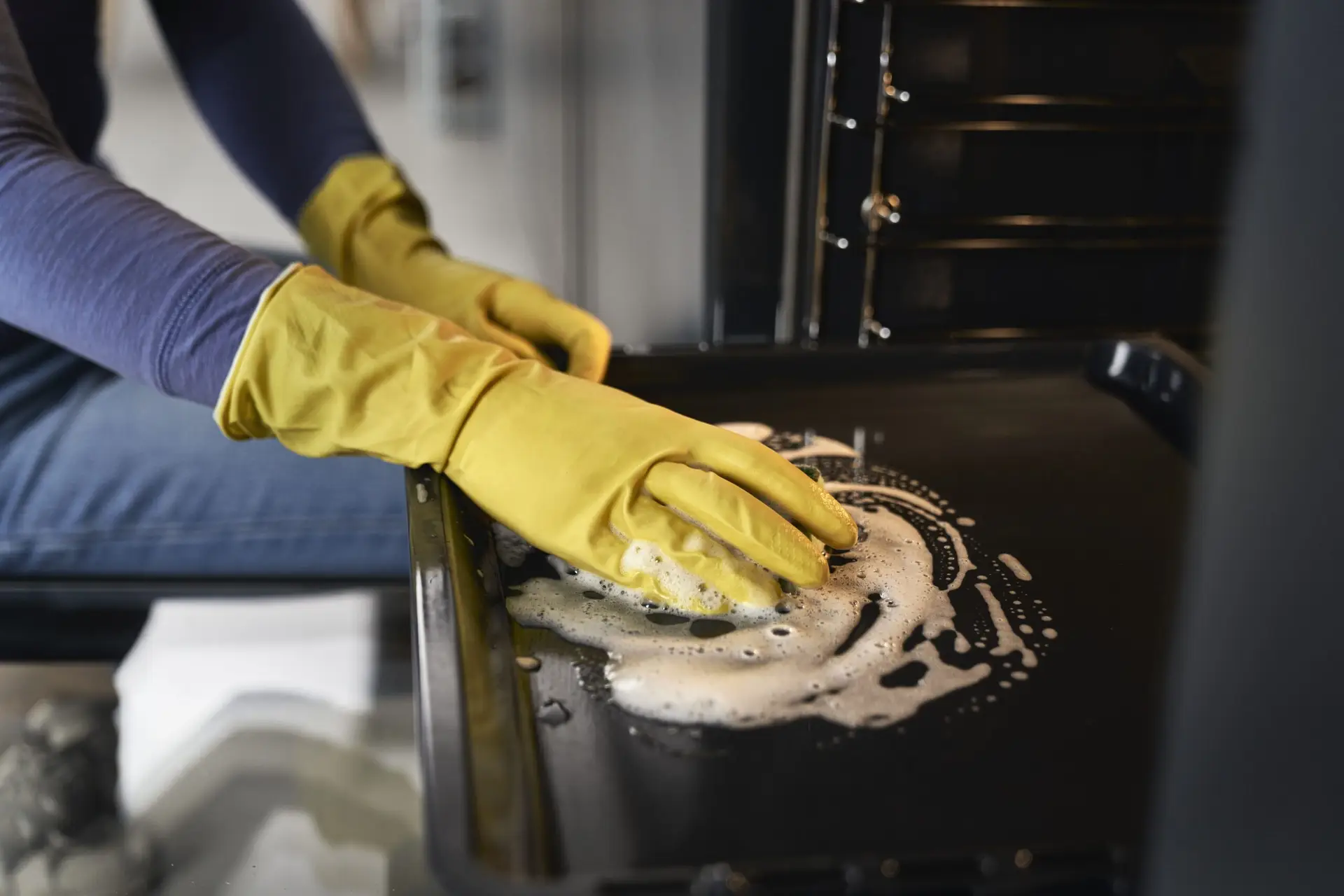
Once the door unlocks and the oven is cool to the touch, you will see a layer of white ash on the floor. Use a damp microfiber cloth or a small vacuum attachment to remove it. If any stubborn spots remain, use a 1:1 vinegar-water solution to restore a Masterpiece shine.
Safety Tips for a Gold Star Home
- Ventilate Your Space: The incineration of grease can release carbon monoxide and fumes that are harmful to humans and particularly dangerous to pet birds. Open windows and run your range hood fan throughout the cycle.
- Stay Home, But Stay Away: Never leave the house while the self-clean cycle is running, but avoid staying in the kitchen where the heat and fumes are most concentrated.
- Keep Children and Pets Away: The exterior of the oven can become hot enough to cause burns during the peak of the pyrolytic process.
When NOT to Use Self-Clean: Specialist Warnings
To preserve the Masterpiece integrity of your appliance, avoid the self-clean cycle in these scenarios:
- Before a Major Holiday: The extreme heat can “blow” a thermal fuse or damage the control board. Specialists recommend never running a self-clean cycle right before a big cooking event (like Thanksgiving) to avoid an unexpected appliance failure.
- If You Have Heavy Grease Flooding: If the oven floor is covered in thick oil, the self-clean cycle could trigger a grease fire. Manual degreasing is required first.
- Old or Damaged Gaskets: If the rubber seal is cracked, the heat won’t be contained properly, potentially melting your kitchen cabinet finishes.
FAQ: Professional Insights
Can I use oven cleaner inside a self-cleaning oven?
Generally, no. Most manufacturers warn against using commercial “off-the-shelf” oven cleaners inside self-cleaning units because the chemicals can damage the specialized enamel coating. For a Gold Star clean between cycles, stick to our Baking Soda Method.
Why does my oven smell during the cycle?
The smell is caused by the carbonization of food particles. While common, it is a sign that you should have removed more surface debris before starting. Always ensure maximum ventilation.
How often should I run the cycle?
For most households, once every six months is sufficient. Over-using the high-heat cycle can shorten the lifespan of your oven’s sensitive electronic sensors.
Maintain Your Kitchen’s Harmony
At Harmony Cleaning, we provide the specialist expertise needed to manage the most difficult tasks in your home. Our team understands the technical nuances of modern appliances, ensuring your kitchen remains a Masterpiece of safety and sanitation. From deep oven resets to weekly maintenance, we bring a Gold Star commitment to every detail.
- Appliance Safety Specialists: Trained in the latest pyrolytic and steam-clean technologies.
- Total Home Health: Prioritizing air quality and family safety.
- The Harmony Standard: Excellence that protects your investments.
Is your oven ready for a professional reset? Contact Harmony Cleaning today for a specialist deep clean and let us turn your kitchen into a Gold Star sanctuary!